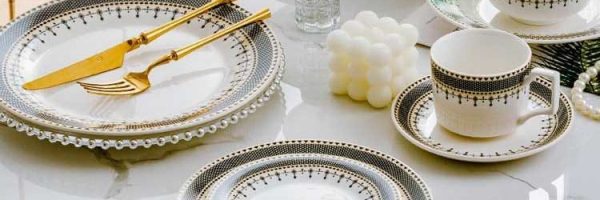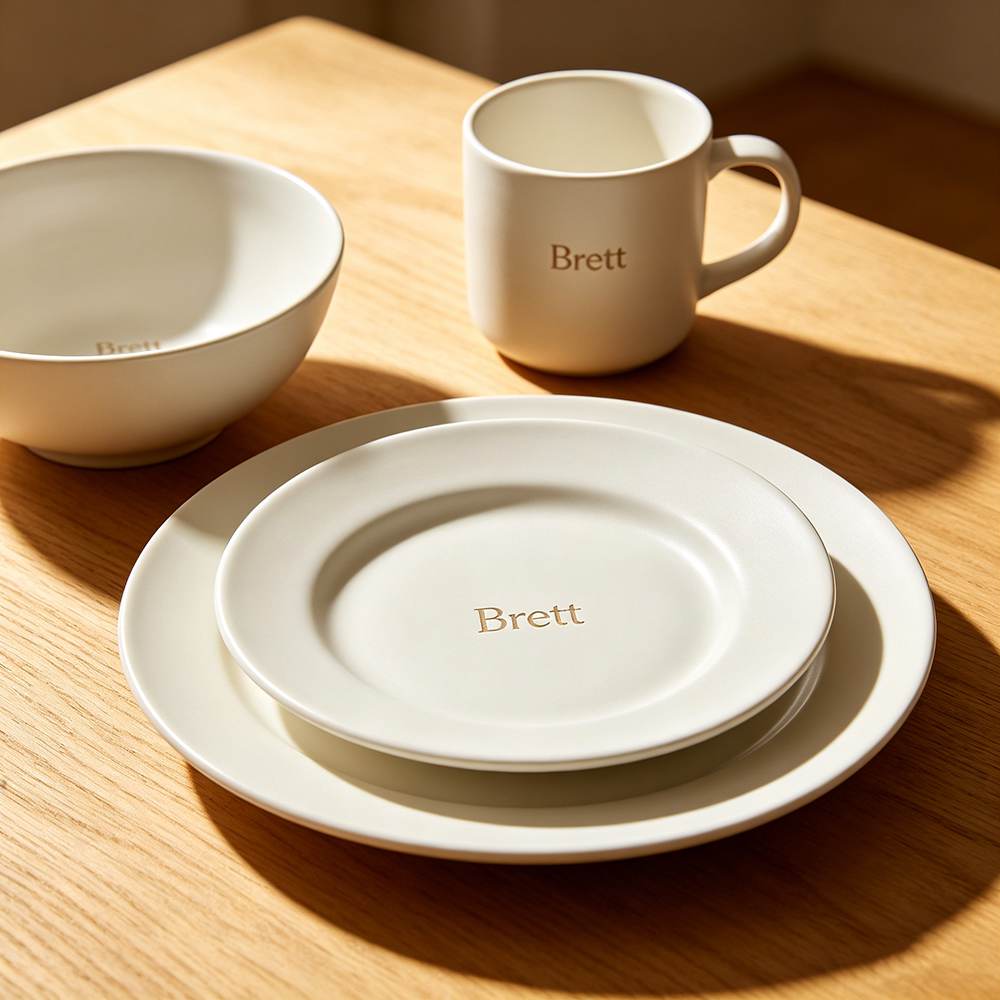
Some hospitality brands live on the billboards, while others live on their menus.But the best hospitality brands? They live on their tables and dinner plates! Private label dinnerware isn’t just about placing logos or branding elements on Porcelain Dinnerware. It’s about turning every table into an experience for every guest that they remember and cherish. It’s about getting them to know your brand even before they order their food. Designing the right tableware to create such an experience is the tricky part. A simple branded plate has to undergo a complex journey to make it all the way to the dinnerware fleet. There are OEM design decisions, glaze chemistry, and FDA food contact compliance standards that must be met. Then, come the branding elements that make the dinnerware truly yours. What Private Label Dinnerware Means For most brands, private label dinnerware simply means having a logo on a plate. But in the true sense, it’s like building a mini manufacturing ecosystem around the brand’s identity. For the hospitality business, it means designing tableware around the OEM/ODM structure. It includes everything from how the dinnerware is produced, fired, finished, and certified. It includes a custom logo application, either by decal, glaze, or embossing. Explore more on Ways to Print Your Logo on Plates. Private labeling doesn’t stop at design or logos. It extends into the technical lifecycle of the product, and that includes material selection, the firing process, glaze finish, and, of course, compliance and certification. It’s no wonder private label dinnerware is your brand architecture. And that architecture has to stay consistent, where every reorder must match the previous batch in performance and appearance. The level of manufacturing precision is what separates true private label dinnerware from basic logo application. The Private Label Production Flow Behind every branded plate in a hotel, a whole process is involved that is much unlike the retail ordering process. Here’s the step-by-step private label production process. The Brand Brief For private label dinnerware, a brand brief is designed that includes the hotel’s F&B positioning and brand guidelines. You have to give the manufacturer the design, branding elements to be placed, and other precision requirements. The factory then translates the information into mold compatibility, kiln firing, and glaze chemistry. How compatible the design is with all these manufacturing steps can determine whether the MOQ stays low or can be scaled. Mold Selection or Mold Creation The production process usually involves two paths: OEM vs ODM. Learn more about Custom Dinnerware for Hotels & Restaurants: OEM vs ODM Explained. While ODM is faster, as it works with existing plate shapes, molds, and proven designs, OEM gives you more flexibility in terms of customization. Most brands take the ODM route because it offers faster sampling and lower MOQs, but true private label dinnerware is unique in every sense. It stands out from the competition in terms of glaze finish, size, color, pattern, logo, and overall form. For the manufacturer, that means creating a new mold, making structural engineering adjustments, and calibrating for shrinkage, as ceramics, particularly porcelain, often shrink by 8–12% during the kiln firing stage. But that’s what makes the process expensive, as well. Sampling and Prototype Firing Before mass production begins in a factory, the sample pieces are fired in kiln batches. The glaze reactions are tested, and so is the logo durability. In ceramics, the sampling stage is very important, as firing at high temperatures can alter ceramic behavior. In fact, as per the Journal of the European Ceramic Society, firing consistency is one of the strongest predictors of structural durability and glaze stability in porcelain and stoneware systems. Branding Application Next, the branding elements are applied. These are mostly done via decal firing in hospitality environments, where the logo is printed and then fired into the glaze layer. There are also options like underglaze printing, which come at a slightly higher cost but also have higher durability. Then there’s embossed mold branding where the logo is physically formed into the ceramic body. Each method has unique kiln cycle requirements, defect risk rates, and MOQ thresholds. This is also where another important factor comes into play; learn more about why the glaze changes color in the kiln. Compliance and Food-Safety Private label dinnerware in hotels must comply with the U.S. Food and Drug Administration food-contact material standards (CFR Title 21) and the EU Regulation 1935/2004 for food-contact safety. Both frameworks ensure there’s no harmful migration of lead or cadmium in the food. Apart from that, they also require the dinnerware glaze to stay stable under heat and acidity, and be safe for repeated dishwasher exposure. Why Private Label Dinnerware Is a Manufacturing Strategy OEM ceramic suppliers structure private label production around three key processes: kiln efficiency, mold amortization, and glaze batch stability. So the question is not whether the manufacturer can fit your brand logo onto the dinnerware, but rather if they can produce private-label dinnerware specific to your identity. Manufacturers like Brett support private label programs by aligning hotel branding with their existing mold libraries, reducing tooling costs via shared production bases, consolidating SKUs across multiple properties, and optimizing kiln runs. Kiln-driven Cost Structure One of the most expensive stages of the ceramics production process is firing. Most industrial kilns for vitrified hotelware and porcelain operate in the range of 1200-1300°C, where materials undergo sintering and vitrification. Since the kilns require full load efficiency to be cost-effective, manufacturers try to optimize production by maximizing kiln utilization. They schedule compatible products together and reduce empty spaces as much as they can. Batch-Based Manufacturing Ceramic production is batch-controlled. Each stage, including forming, drying, glazing, and firing, must follow tightly controlled parameters to avoid structural or visual defects in the final pieces. This is critical because even small variations in humidity, drying time, or firing ramp rates can lead to warping, pinholing, crawling, or uneven gloss levels. To avoid it, manufacturers standardize production into controlled kiln batches where all pieces share the same thermal and chemical conditions. Tooling (Mold) Amortization