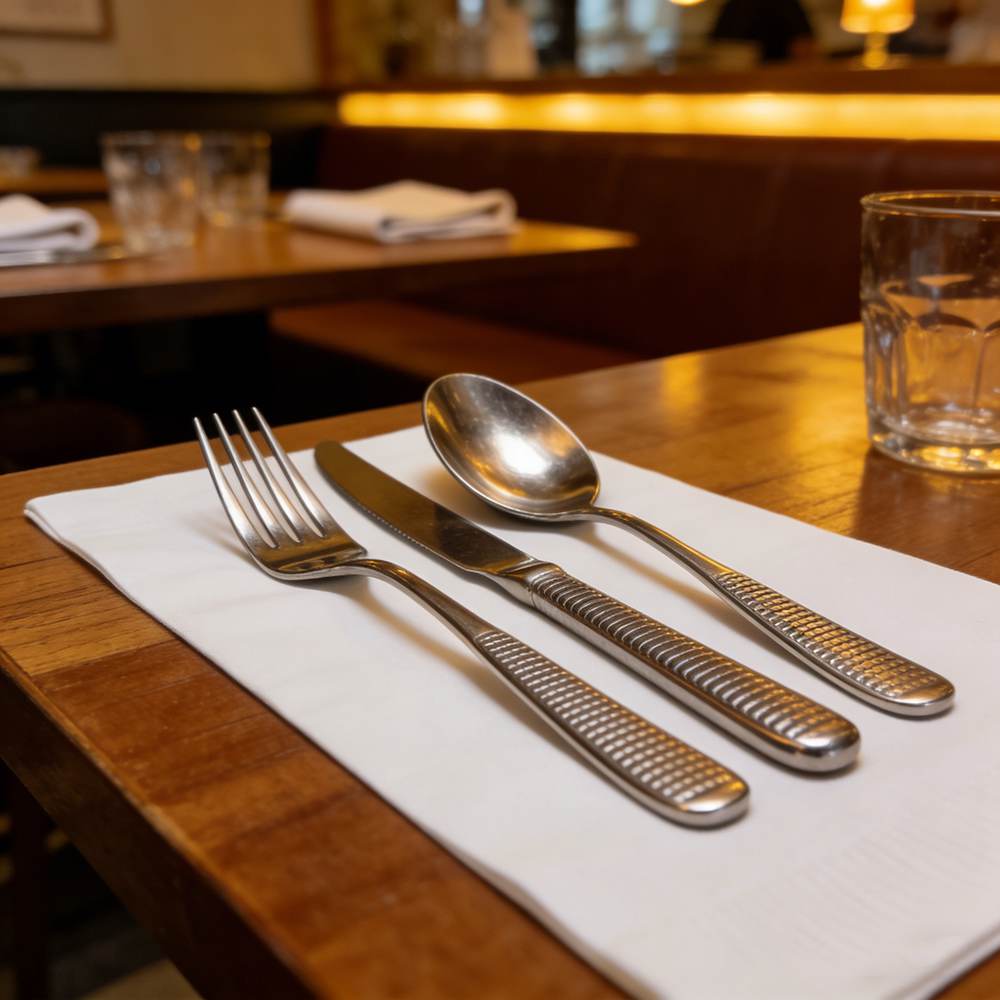
You sprinkle the final garnish onto your signature dish, and it heads to the table in perfect form, looking like a delicacy. The guest leans in, picks up the fork, and notices one tine is slightly bent, and suddenly, he’s questioning the entire experience. The thing about flatware, unlike tableware or decor, is that it’s not visibly dramatic, but anything off and it’s enough to be noted. Even before the guest takes the first bite, the ambience and service are perceived as low in their minds. Behind the scenes, another situation is brewing. The procurement manager is struggling with another problem: the flatware loss. The teaspoons are shrinking in number, and during peak service, by the time of dessert, there isn’t a single spoon left to send out. To avoid these recurring concerns, we need a mindful procurement strategy to buy quality restaurant supply flatware. Being the only tabletop item the guests physically hold and literally put in their mouths, it has more influence than the dinner plates or glassware. However, unfortunately, restaurant flatware is often treated as an afterthought. Stainless Steel Flatware Grades: What the Numbers Actually Mean Most dinnerware procurement teams are misled by the stainless steel flatware grades. There’s the famous 18/10 and 18/8 debate, which is usually perceived as a quality gap. However, in reality, the numbers indicate the content, not the quality. The first number, 18, refers to the chromium content. Chromium forms an invisible protective layer on the flatware that keeps it rust-free and lasting. In fact, most commercial flatware starts with a chromium content of 18%. The next number after the slash is nickel. Nickel enhances the shine and improves the corrosion resistance of the spoons and forks. 18/10 vs 18/8 An 18/10 grade flatware contains 10% nickel, and 18/8, 8%. However, in practice, both qualities are made from the same grade 304 stainless steel. Meaning, they both meet the global standard for premium commercial flatware. As for performance, the difference between the two is hardly noticeable. Both grades provide strong corrosion resistance, durability, and excellent polish retention. However, 18/10 has a slightly higher margin of shine and resistance under demanding conditions. 18/10 also comes with a more efficient price tag and serves best in concepts where the menus lean towards acidic ingredients like citrus, wine, or vinegar. 18/0 18/0 stainless steel has no added nickel in its composition (hence the 0 here) and is manufactured from Grade 430 stainless steel. That makes it comparatively more affordable and suited for high-volume operations. However, flatware without nickel may get dull or develop water spots over time, especially with extensive dishwashing. 13/0 You’ll rarely see any flatware sets with a 13/0 grading. It’s more specific to knife blades. With low chromium and zero nickel content, the material is harder, giving the knife blades a sharper edge. However, it comes at a cost. Since there’s no added nickel, the blades are susceptible to rusting. However, proper drying and maintenance can enhance the life and prevent rusting. In commercial settings, many knives combine a 13/0 blade with stainless steel handles of 18/0 grade. The Verdict Restaurant supply flatware selection isn’t about going with the highest number or grade. It’s about aligning the material performance with your operational needs. For fine dining or premium concepts and hotels, 18/8 and 18/10 grades work best as they have a lasting polish and lead to a premium perception of the brand. For casual dining and in high turnover venues, 18/0 is the norm for its cost efficiency. However, many concepts go with 18/8 as the sweet spot between durability, looks, and price. Learn more about these grades in our guide: Stainless Steel Flatware Grades Explained: 18/10 vs 18/0 Flatware Weight and Construction: Why Thickness Matters More Than You’d Expect In flatware, weight is a combination of three elements: gauge, mass, and the weight distribution. Gauge: It is the metal thickness usually measured in millimeters. Mass: Expressed in grams, it is the weight of each flatware piece. Weight Distribution: It determines the way the mass is balanced between the handle, neck, and head of the flatware. You can specify the grade, say 18/10, finish, design, the handles with the most ergonomic grip, and patterns for your flatware supplies, but still end up looking for or replacing forks within months. This isn’t because your choice of material was wrong, but rather the build wasn’t right for your concept. Most suppliers would discuss with you the grade, but won’t tell you it’s the weight that directly affects the performance of the flatware. Forged vs. Stamped Flatware Before we get to the weight categories, it’s important to learn how flatware is commercially produced. There are two ways: Forged Flatware: The flatware is formed from a single, thick piece of stainless steel. It’s shaped under pressure but not pressed or cut. It is denser and has a patterned design that runs all the way around the handle. Stamped Flatware: Stamped flatware is cut from flat sheets and pressed to shape. It’s easier and quicker to produce, and hence more cost-effective. Heavy-gauge stamped flatware pieces can generally last for years without bending or getting dull. Commercial Weight Categories There are four established commercial flatware categories based on weight. Forged This is the premium tier category and is immediately felt by diners given its weight and presence. Mostly common in fine dining concepts, the forged flatware leads to an elevated perception of the brand well before the food lands on the table. These pieces also serve well under extensive serving cycles and dishwashing and have high resistance to high heat, chemical exposure, and handling. Extra-Heavy Weight This is the stamped category, but it comes with a thick gauge, which makes it heavy in the hand. It balances the premium feel without the heavy price and is often the preferred choice in upscale casual dining concepts and hotels. Heavy Weight Reliable, thick, and resistant to reshaping and bending, heavyweight flatware feels high-quality but comes with a more manageable