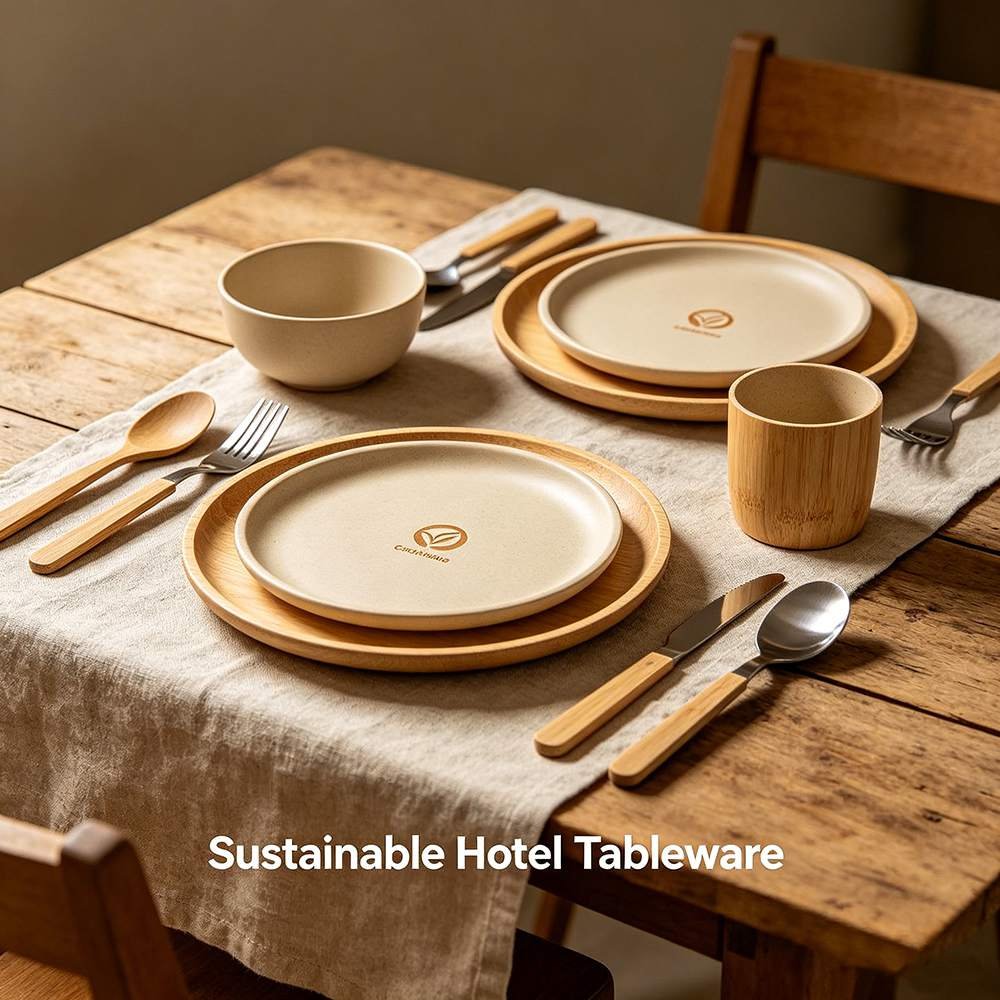
Sustainability in hospitality has crossed a threshold. It is no longer a positioning decision for a brand but a procurement requirement. Single-use plastics are no longer acceptable and are being phased out in hospitality environments in response to the increasingly strict rules and the demand of the consumer, being replaced by reusables. Now, 73 percent of travelers want the hotels they book to show environmental care. This transition has an immediate impact on hotel procurement managers and F&B Directors. Your decision on sustainable hotel tableware impacts your ESG reporting, satisfaction ratings, regulatory compliance, and overall cost of ownership all in one. This guide covers every dimension of sustainable hotel tableware procurement in 2026 — from certified materials and eco-friendly manufacturing standards to supplier evaluation and the business case for making the transition. Why Sustainable Hotel Tableware Matters More Than Ever in 2026 Three forces are driving sustainable hotel tableware from a marketing preference to a procurement requirement in 2026. Regulatory Pressure Single-use plastic cutlery, plates, and straws have been banned in EU member states by the Single-Use Plastics Directive. These post-Brexit requirements are equally reflected in UK rules. Several other states in the USA have laws that are similar. Hotels that serve customers in several markets are now required to prove their adherence to an evolving, multifaceted regulatory regime, and their tableware purchases are on the agenda. Guest Expectations Millennials are now the largest generation of travelers in the hotel industry, and 73 percent are willing to pay more for sustainable hotel offerings. Where properties are unable to show sustainable practices, they are at risk of losing bookings to their competitors that can. Eco-friendly hotel tableware is no longer a differentiator; it’s a base standard expectation, especially for luxury and/or lifestyle properties. ESG Reporting Requirements International hotel brands are now being asked to disclose what they can about their supply chain sustainability credentials — and what, for example, certifications their hotel tableware supplier partners have. Hotel groups with publicly pledged sustainability commitments are at risk of compliance issues, and a supplier without an audited sustainability record is a black mark on an ESG report. Understanding Sustainability Certifications for Hotel Tableware Not every sustainability claim is the same. The certifications that are relevant to the sustainable procurement of hotel tableware are those that have been verified by independent organizations to internationally agreed-upon standards. Global Recycled Standard Global Recycled Standard (GRS) is a third-party verification of recycled content from chain of custody audits. A GRS-certified manufacturer of tableware will prove that their products are made with verified recycled content, and not a marketing promise. The most important certification for procurement teams with recycled content specifications. Recycled 100 Claim Standard Products with the Recycled 100 Claim Standard are 100% made from recycled materials. This certification offers the most assurance for hotel groups with set recycled content requirements. ISO 14001 International standard for environmental management systems – ISO 14001. A manufacturer who is certified to ISO 14001 has developed a systematic way of reducing environmental impacts that extends to the manufacture of energy, waste management, water use, and emissions. BSCI and Sedex Business Social Compliance Initiative (BSCI) and Sedex certifications demonstrate ethical production and transparency. These certifications are becoming more necessary for modern slavery and ethical sourcing commitments by hotel groups for all supply chain partners. FDA and ISO 22000 FDA compliance and ISO 22000 are food safety standards that must be met, particularly for tableware that directly touches food, and especially important for materials that might be less well-known to regulators than traditional ceramics. Eco-Friendly Materials for Hotel Dinnerware Material is the most effective and important sustainable hotel tableware choice possible for most properties: selecting dinnerware that offers durability, good looks, and dishwasher washability, while also being made from a lower impact material. Recycled Porcelain and Bone China The most cost-effective sustainability improvement for most hotel dinnerware initiatives. Today, the most prominent tableware manufacturers have bone china and porcelain dinnerware and bone china collections that contain post-industrial recycled ceramic content and are produced using reduced-energy kiln processes and are certified to the Global Recycled Standard. They are nearly unmistakable when it comes to appearance, chip proof, dishwasher strength and durability, but they’re definitely easier on the environment. Stoneware The logical solution for hotels that emphasize sustainability in their brand. Stoneware is fired to a high temperature for excellent chip resistance and commercial dishwasher durability. Its organic design and textured finish convey a sense of environmental authenticity at the table, which is impossible with traditional white porcelain. Stoneware dinnerware is a visual representation of the property’s sustainable values for boutique hotels, lifestyle properties, and eco-resorts. Kiln Change Dinnerware The natural variations in the firing process bring unique, organic color effects to each dinnerware piece in the Kiln Change dinnerware. The natural variation is not a fault of the manufacturing process; it’s a design feature that tells the story of craft, authenticity, and natural material sourcing. Kiln change ceramic dinnerware provides a table setting that tells a sustainability story, quietly, with no words of marketing copy for sustainability properties. What to Avoid When selecting eco-friendly hotel tableware, avoid these common pitfalls: Single-use plastics— now banned or heavily restricted across the EU, UK, and multiple US markets. Melaminewith formaldehyde binders — avoid for formal dining contexts and verify compliance with EU food contact regulations. Unverified bamboo composite tableware— many products marketed as eco-friendly contain melamine binders; always request material safety documentation. Products without food safety certification— FDA compliance and ISO 22000 are non-negotiable regardless of sustainability claims. Sustainable Flatware: The Case for 18/10 Stainless Steel 18/10 stainless steel flatware has been the most sustainable hotel flatware choice available for decades — and the sustainability credentials speak for themselves: Lifespan— quality stainless steel flatware will serve for 10 to 20 years, whereas disposable flatware will serve only for months. Recyclability— 100% end of life recyclable without loss of quality; no issues with recycling at end of life because stainless steel is 100% recyclable. Mostcommercial stainless steel production uses 60 to 80 percent recycled content in raw materials Chemical stability— stainless steel