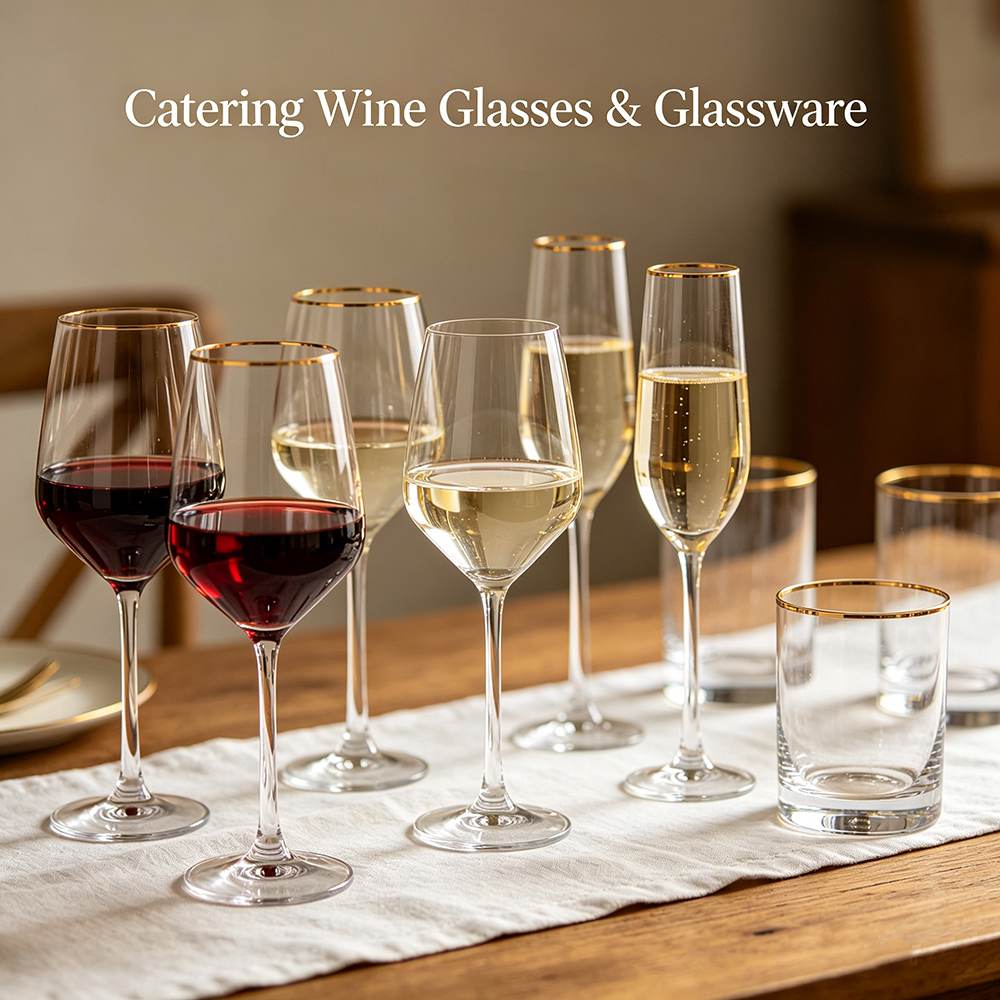
You have probably had that uncomfortable moment where you are standing in the prep area with racks stacked up high. You’re counting the glasses faster than you think and wondering whether the inventory will be enough. The event begins, and you are thinking, “Are they the right ones for tonight? What will happen if even around 20% of them don’t even make it through?” This is all behind the scenes of catering. Glassware is one domain where miscalculations can turn into visible problems. If you look for catering wine glasses or catering glassware catalogues, you’ll be overwhelmed with the product choices and endless SKUs. But all of them come with zero guidance about the procurement strategies or ordering quantities. Nobody is actually telling you what will work on a 200-guest wedding and how many glasses you would actually need? No one talks about the wrong rim thickness that can downgrade the guest experience. The truth is that glassware is not a line item. It is the highest breakage and highest replacement cost category in catering operations. In this guide, let’s explore how choosing water glasses can be an operational decision. We will talk about how speciality glassware is worth buying and the difference between the glass materials. So if you have ever underplanned or overboarded your glassware inventory, you are just on the right page. Types of Catering Glassware Every Operator Should Know Unfortunately, most catering setups fail because they are not using the right mix. No matter how aesthetically appealing or attractive the glasses look, we don’t need so many shapes and sizes of glasses. Buying glassware is more about how it will function and not about the categories. You need to look at the menu, what’s getting poured, and how fast it is being served and cleared. Here are some basic catering glass types worth considering. Wine Glasses for Catering: Red, White & All-Purpose Often, operators overcomplicate glassware inventory by ordering the whole range of catering wine glasses. However, in a practical situation, most events do not need a full sommelier setup. For high-end or fine dining catering, we need separate red and white glasses. But in the majority of service events, doubling the SKU will only lead to logistical friction. Red Wine Glasses:The red wine glasses usually serve around 12 to 22 ounces of liquid. They have a wider bowl that allows aeration, and the Bordeaux-style shape is the most practical. Browse Brett’s Minimalist Transparent Crystal Wine Glass Set. White Wine Glasses: These are narrower and usually serve about 10–14 oz. These can preserve temperature and aroma, and given the narrow bowl, have less surface exposure. All-purpose Wine Glasses: This is your quiet MVP. The glasses serve about 12–16 oz of both red and white wine without slowing service. Style of Glasses Glassware comes in two styles: stemmed and stemless. The stemmed glasses appear more formal, and are the set expectation in weddings and formal dinners. The stemless range, on the other hand, is stable and stackable. They have much less breakage in outdoor and high-turnover events. Water Glasses & Goblets Water service is not the category where we run after elegance. It is where we just have to keep the service running. Every seat needs one glass, and that makes water glasses for catering the highest quantity items to stock. Water glasses also take the most abuse. Most water goblets are stemmed and can carry 10 to 14 ounces of water. These are best used in informal settings like weddings, banquets, and plated service. Check out Brett’s Custom Vertical Stripe Wine Champagne Glasses. You can also go with tumblers that have a volume of around 8 to 12 ounces. These are flat-bottom and stackable, and built for speed. That makes them the ideal choice for casual events, buffets, and high-volume service. When buying water glasses or goblets, stackability is also important. You need to see how many glasses will fit a rack, how well they can last in dishwashing cycles, and the handling speed of the servers. Browse Brett’s Luxury Gold-Rimmed Crystal Glass Set here. Specialty Glassware: Champagne Flutes, Cocktail Glasses & Beyond The specialty glassware offers dozens of options in event glassware. However, we only need a few and in controlled quantities to optimize the cost and service. The key is to align the type of specialty glassware with the beverage program. Learn more in our guide: Wine Glasses vs. Water Glasses vs. Specialty Glassware. In the category, you will find styles like: Champagne Flutes: Champagne flutes are a non-negotiable inventory for weddings and toasts. Ideally, plan to buy one for every guest. Explore Brett’s Crystal Champagne Flutes Setand Vintage Diamond Shaped Embossed Crystal Glass Set Highball/Collins Glasses: If you have cocktails on the menu, the Collins glasses are much needed. Rocks/Old Fashioned Glasses: These can handle spirits served neat or on ice. Cordial/Dessert Wine Glasses: The dessert wine glasses are a niche. Only stock them if you are serving dessert wines, hosting formal plated events, or catering to premium tiers. Understanding Glassware Materials: What Holds Up in Catering Most catering wine glass catalogues visually appear very similar. The actual difference comes up during transportation, dishwashing, and service. The glassware material is not a tiny detail. It’s a strategic decision that can cost you dearly in business. Learn more in our Tempered vs Annealed Glassware guide, and you will see that glassware material goes much deeper than “cheap vs expensive.” Soda-Lime Glass About 90% of all manufactured glassware is soda lime. It includes the bulk wine glasses we find in hospitality catalogues. These glasses are affordable, easier to produce and scale, and clear enough for the standard service. However, these also have a low resistance to thermal shocks, such as those experienced in the dishwasher cycle, and are also prone to cracking and chipping. So while they are perfect for controlled environments, in catering with all the transportation and stacking involved, they can wear out much faster than you’d expect. Tempered Glass Tempered glass starts off