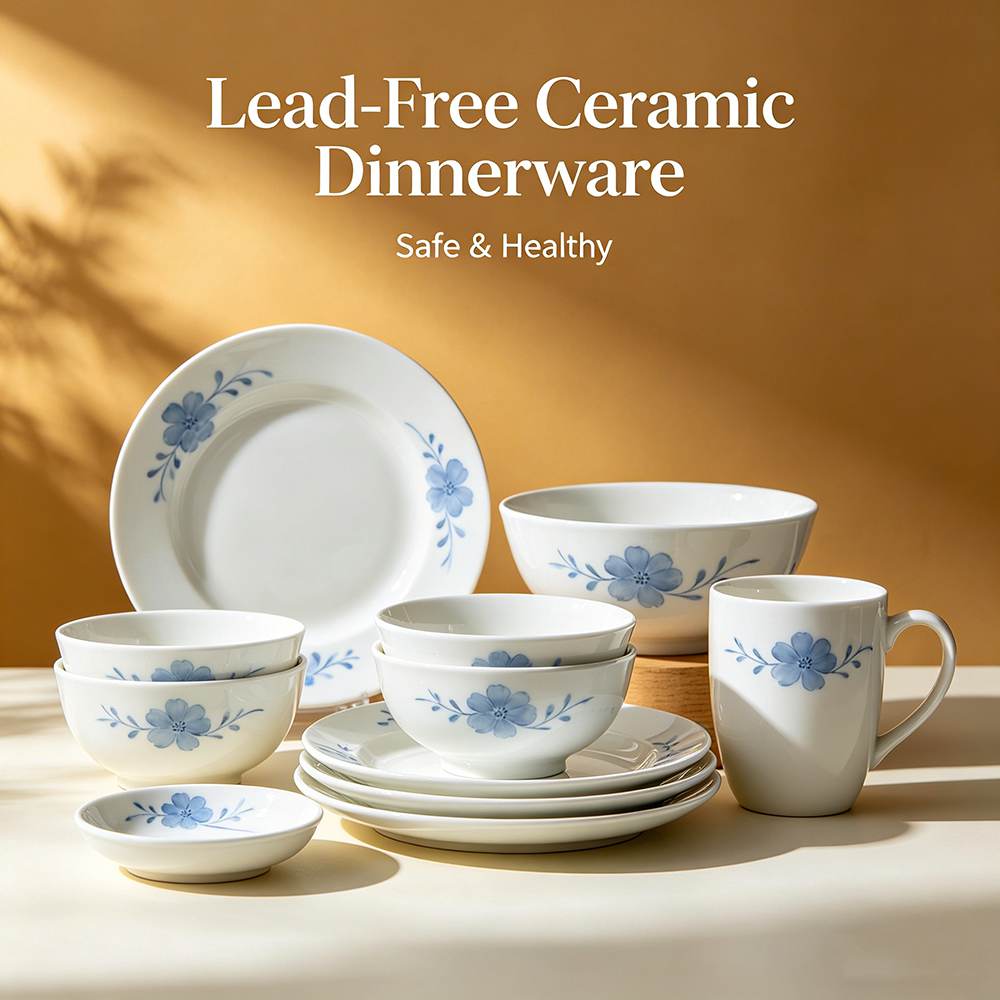
Hotels plate more meals in a single week than many households do in a decade. At that scale, dinnerware becomes a food-contact material subjected to constant chemical stress. Acidic sauces sitting under heat lamps, citrus desserts held during service delays, repeated high-alkaline commercial dishwashing cycles, and so on. Since this happens thousands of times every week, the dinnerware can’t afford any instability in the ceramic glaze composition. That’s why lead-free ceramic dinnerware should be treated as an important compliance decision in hotels. According to the WHO, there is no level of lead exposure that is considered safe. In fact, lead exposure is one of the ten chemicals of major public health concern and accounts for more than half of the 2 million lives lost to chemical exposure annually. Unfortunately, many traditional ceramic glazes are common sources of lead exposure, alongside plumbing, paint, and industrial processes. As a hotel procurement team, maintaining dinnerware safety is a crucial part of supply chain compliance. To avoid regulatory issues and keep your guests safe, it’s important to make sure your dinnerware doesn’t contain improperly stabilized lead or cadmium in its glaze. In this guide, we’ll tell you how to procure compliant and lead-free ceramic dinnerware for your hotel. How Lead and Cadmium End Up in Ceramic Dinnerware If lead and cadmium are so dangerous, how did they end up in ceramic dinnerware in the first place? Lead oxide, a crucial component in lead, was historically used in ceramic glazes because it lowered the melting temperature of the glaze. This resulted in a smoother, glossier finish than previously achieved. It also expanded the usable firing temperature range, which made the manufacturing even more convenient. At the time, the manufacturers didn’t consider the risk of using lead and cadmium in ceramics. When it’s fired at an inadequate or uncontrolled temperature, lead does not get fully incorporated into the glaze structure. This makes it available to leach into food, especially if it’s something acidic like vinegar, tomato, or citrus. Commercial-grade porcelain, when fired at over 1,280°C, is considered “vitrified” porcelain. In vitrified ceramics, the glaze bonds completely to the ceramic matrix, preventing any lead from coming in contact with the food. Low-fired earthenware like traditional pottery or terracotta is where most of the risk related to lead is concentrated. However, lead can also be exposed if the lead-containing decorations are applied over the glaze instead of being bonded into it. Glazes can also be damaged through cracks, chips, or extreme wear, exposing lead. That’s why hotels must replace their dinnerware at the first crack or chip or invest in lead-free dinnerware ceramics. Then, there’s cadmium, which is used to create bright oranges, yellows, and reds in ceramics. However, it’s a known carcinogen that can cause severe bone and kidney damage. It can be exposed to food in the same ways we mentioned for lead, so it’s best to stick to food-safe ceramic dinnerware. Thankfully, most modern commercial dinnerware manufacturers now use non-lead glazes (NLG), but it’s still possible to get lead or cadmium contamination from legacy equipment, inconsistent firing, or unverified supply chains. In fact, approximately 38% of sampled ceramic dinnerware failed testing in a 2023 survey due to excessive lead or cadmium migration above allowable limits. That’s why finding truly lead/cadmium-free dinnerware can be tricky for a hotel procurement team. The Regulatory Framework: FDA, Prop 65, EU, and International Standards As a new hotel owner or procurement team, you may not know about the complete regulatory landscape surrounding lead-free dinnerware in hotels. In fact, there are several international and FDA dinnerware regulations you must follow to maintain ceramic food safety standards. Here are the main regulations you need to know about before choosing the right dinnerware material. US FDA Compliance Policy Guides (CPG Sec. 545.450 and 545.400) The FDA sets “action levels” for food-safe dinnerware as thresholds above which they must take regulatory action. This does not mean these are “safe limits” of lead quantities in dinnerware – these are enforcement thresholds that would only be reached in worst-case scenarios. According to FDA CPG 545.450, not all dinnerware products have the same lead leaching limits. Flatware like plates, small hollowware like cups and mugs, and large hollowware like bowls and serving dishes all have different thresholds. There’s also a separate test for lead leaching from cup and mug rims. In this case, the lead leaching levels must not exceed 4.0 mg/L and cadmium must not exceed 0.4 mg/L in lip areas. Another thing to keep in mind: if a supplier says their dinnerware “meets FDA standards” it does not mean it doesn’t contain any lead. It just means the lead leaching is below the action level. Per CPG methodology, ceramics have to contain zero extractable lead when tested to be labeled “lead-free.” California Proposition 65 The California Proposition 65 is stricter than the federal FDA limits. It mandates a leachable limit of 0.226 PPM, compared to the FDA’s category-based thresholds that are considerably higher. Hotels operating in California must comply with this regulation strictly, as it allows for private citizen lawsuits, or “bounty hunter” provisions, against businesses that don’t warn customers about possible chemical exposures. Hotels sourcing dinnerware for California properties must specifically verify that their supplier is Prop 65 compliant; being FDA compliant alone is not enough. EU Directive 84/500/EEC and Regulation 1935/2004 The laws against lead exposure in dinnerware for European hotels are even stricter. The EU Directive 84/500/EEC details maximum migration limits for lead and cadmium in ceramic articles intended for food contact, tested using 4% acetic acid solution. Dinnerware manufacturers and importers in the EU must provide a written Declaration of Conformity guaranteeing that their products meet the required limits. This documentation must accompany ceramics through the supply chain. The EU is also actively reviewing these limits and may even reduce them in the future, as the current exposure levels are still considered too high according to the European Commission’s own assessment. ISO 6486, ASTM C738, and Germany’s LFGB There are also several international rules regarding