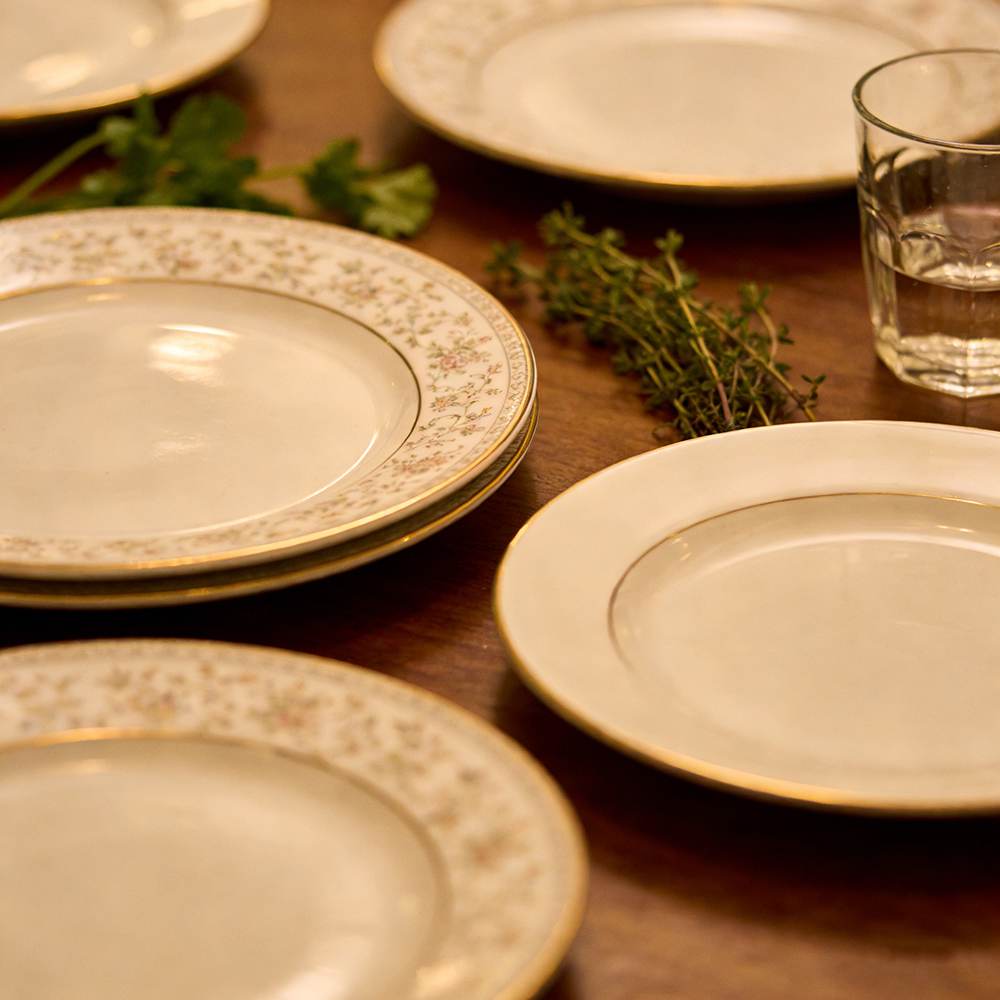
When opening a restaurant, most people have only planned the major factors like the type of cuisine or location. No one really prepares you for the technical aspect of things, like how many plates does a restaurant need? This may seem like a minor detail, but it has a huge impact on your daily operations. Order too few plates, and your servers will be waiting on the dish pit during rush hour. Order too many, and you’ll waste money and storage. A good industry baseline to follow is the 3:1 rule, meaning 3 plates per seat. Of course, this isn’t a strict expectation, just a starting point to help you kick off your restaurant plate inventory. The final answer depends on menu complexity, service format, plate categories, and replacement planning. In this guide, we’ll cover everything you need to calculate the right number of plates for your business. The 3:1 Rule — Your Starting Calculation There’s no universal answer to “how many plates does a restaurant need?” However, most restaurants follow the 3:1 plate ratio, which means 3 plates per seat. This rule comes from G.E.T. Enterprises, a leading commercial dinnerware manufacturer for restaurants. This way, there’s always one plate in service, one in the wash cycle, and one cooling or resting. This prevents thermal stress, which happens when you put hot-washed plates right into service instead of cooling down. Most plate materials don’t tolerate rapid temperature changes too well. When the surface cools down before the interior, it can lead to warping and cracking over time. Plus, this ratio also ensures that you never run short even during peak hours. Dropping below this ratio almost guarantees trouble. You’ll be forced to serve plates that are still wet or hot from the washer, which increases the risk of breakage and costs you more than it saves you. In any standard restaurant where the dish pit runs nonstop, a 2:1 plate ratio would create a bottleneck within the first hour. Still, remember that the 3:1 rule is just the starting point. Your final answer needs to account for many other factors and still add a few extra plates for good measure. Let’s say there are 100 seats in your restaurants, which means you need at least 300 plates as a baseline. Then, add a 10–15% buffer in case of breakage or peak surges. That brings you to about 330–345 plates. Since dinnerware is usually sold by the dozen commercially, it’s best to round up to the next dozen. That means you need to order 29 dozen or 348 plates for your 100-seat restaurant. Of course, you’ll need to apply this ratio to each type of plate, bowl, or piece of cutlery in your restaurant. At the end, your total restaurant dishware inventory will be much higher than 348. We’ll help you calculate that in the next section. Beyond Dinner Plates — Building Your Full Plate Inventory by Category Of course, no restaurant serves just one type of plate. You need to factor in all the dinner plates, side plates, bowls, and other dinnerware in your restaurant plate inventory calculation. Based on your menu structure, you may need different amounts of each type of plate. According to commercial dinnerware quantity guidelines per 100 seats, your calculation would be: Dinner Plates (10–12”):This is the non-negotiable backbone of any dinnerware program. You’ll need at least 3 per seat, so that’s 300 pieces. Side/Salad Plates (7–8”):Your usage of side/salad plates depends on whether your menu features any plated salads, shared appetizers, or bread-and-butter services. As a good rule of thumb, you’ll need about 1.5 or 2 per seat, which means around 150–200 pieces total. Bread and Butter Plates (6–7”):You’ll only need these plates if your concept includes bread service. In that case, you’ll need about 1 or 1.5 per seat, meaning 100–150 pieces. If not, many casual-concept restaurants skip this plate entirely. Bowls:If you have a few pastas and soups in your menu, you’ll need no more than 1.5 to 2 bowls per seat. That means around 150–200 pieces. However, if your menu is bowl-heavy, centering around soups, ramen, poke, or pasta, it’s better to follow the 3:1 ratio. Dessert Plates (6–8”):Most restaurants need 1 or 1.5 desserts per seat, which means around 100–150 pieces. These can also double as appetizer plates to reduce the total stock-keeping unit (SKU) count. Specialty Pieces:These include charger plates, share platters, appetizer boats, and other miscellaneous pieces. You only need to order them based on what your menu actually uses. Unused specialty pieces are typically dead inventory that takes up time and money. Before making your restaurant opening dinnerware order, make sure to do a complete menu analysis. For instance, if you have a steakhouse that doesn’t serve soups or pastas, you can skip bowls entirely. On the other hand, a pasta-centered restaurant would need twice as many bowls as dinner plates. Adjusting Quantities by Restaurant Type Here’s what most people don’t cover when you ask, “How many plates does a restaurant need?” The 3:1 plate ratio isn’t a universal rule to be followed by all types of restaurants. It’s just a starting point to help you kickstart your calculation. The final number will be vastly different depending on the type of restaurant you have. Fine Dining Most fine dining restaurants typically have 50 to 80 seats. There’s a much higher variety of menu options, which translates to variety in plate types, too. However, the overall volume will be low since there aren’t that many people dining at a time. Additionally, fine dining places typically have a multi-course service, ranging between 4 and 7 courses. This means there may be around 5 plate categories, with 3 pieces per seat for each category. In the end, the total number of unique plates may be higher than standard, but the total volume will be moderate. You may also need to budget for premium materials like bone china or fine porcelain. Casual Dining Casual dining restaurants have anywhere between 80 and 150