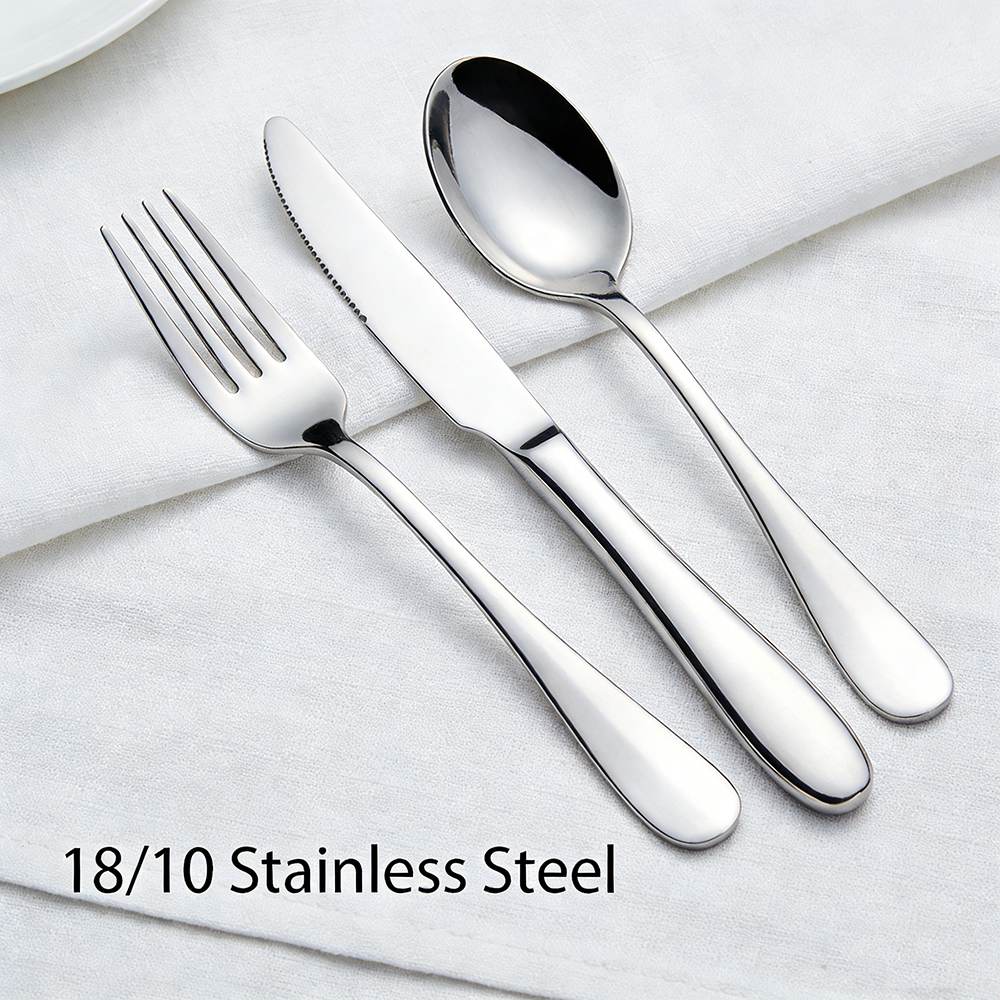
You’ve requested quotes to procure flatware from multiple suppliers. Now you’ve narrowed down to three, where the pricing, seller’s profile, and designs appear the same. But, as you look up close, you notice the fine print: 18/10, 18/8, and 18/0. Makes you wonder, are you buying flatware or decoding a secret message? If you think these numbers don’t matter, you could end up with a bulk order that doesn’t even hold up for six months. What is 18/10 stainless steel, and why should you care about it? Let’s learn about these stainless steel grades of flatware from a procurement floor perspective. What is 18/10 Stainless Steel? Composition and Metallurgy The stainless steel grades in flatware are a telltale number for the composition. Two sets may look and feel the same, but the composition can determine how long they’ll last before they start giving you trouble. Take 18/10, for instance. It means it has 18% chromium and 10% nickel in its composition, where the rest is made up of iron and trace elements. What does the composition do to the metal? That’s where a little chemistry comes in. Chromium reacts with oxygen to form an ultra-thin passive oxide layer on the surface. The layer protects the metal from rust and scratches. In other words, that’s the kind of stainless steel that can survive the daily abuse in commercial kitchens. The nickel composition stabilizes the surface. Or in other words, it increases corrosion resistance against acids and detergents. It keeps the surface brighter for longer, and also, it is nickel that makes the metal ductile, so it can be molded into thinner and more refined designs. The Grade 304 Most mills wouldn’t advertise their offering as 18/10. They use another terminology for it: Grade 304 stainless steel. This means there isn’t a fixed percentage of the metals but more of a range, like: Chromium: 18–20% and nickel: 8-10.5%. In practice, Grade 304 flatware usually has a nickel composition of around 8.2-8.5%. The 18/10 vs 18/8 stainless steel debate, hence, becomes more of a marketing gimmick than actual metallurgy unless you’re getting a good look at the mill test certificates (MTCs). So go by the grade and performance, which brings us to another interesting difference, austenitic stainless steel vs ferritic. In this grade, Brett’s 24 PCS Gold-Plated Stainless Steel Cutlery Gift Set is worth considering. Austenitic 304 or 18/10 Vs Ferritic 430 or 18/0 Austenitic stainless steel is non-magnetic, ductile, and can resist corrosion and handle commercial cycles better. Ferritic, on the other hand, is magnetic and stiffer. It has, however, a low resistance to corrosion and dulling over time. The difference is not subtle in a hotel environment. You’re working with high alkaline detergents (pH 11–13 in many commercial systems), rinse temperatures of around 80-90°C, and hundreds of cycles a week in high-volume settings. The combination of heat and chemicals starts to expose the materials. Lower nickel content and you’ll see dulling, staining, and even early signs of corrosion creeping in. Higher nickel content? The finish holds, the shine lasts, and the pieces age far more slowly and gracefully. Under FDA 21 CFR food-contact frameworks, stainless steel is assessed on its chemical stability and resistance to leaching, rather than fixed composition ranges. Both 18/10 and 18/0 stainless steel are widely used in food-contact applications and can meet regulatory requirements when properly manufactured. So, even though compliance can get the flatware in through your door, it’s the durability that’ll keep you from reordering emergency batches just half a year after procuring your first batch. Learn more in our guide: Stainless Steel Flatware Grades Explained: 18/10 vs 18/0 What Hotel Buyers Need to Know About 18/10 vs 18/8 vs 18/0 The stainless steel flatware grades are not about buying premium vs economy. They reflect the long-term impacts on the appearance, durability, losses, and replacement cycles. The Grade Comparison Grade What It Is Performance Where It Works Where It Fails 18/10 Grade 304 (austenitic) Highest corrosion resistance, polish retention, and non-magnetic Fine dining, in-room dining, guest-facing service Excessive for high-loss environments 18/8 Grade 304 (austenitic) Almost the same as 18/10 in Same as 18/10, but better value Excessive for high-loss environments 18/0 Grade 430 (ferritic) Low corrosion resistance, magnetic, dulls faster Buffets, banquets, staff dining, pool service Visible wear in premium outlets 18/10 (Grade 304) 18/10 is the front-of-house flatware. Even after undergoing hundreds of commercial dishwasher cycles, it looks the same. Even if you use it for serving acidic foods like citrus and dressings, it doesn’t lose its shine, whereas lower grades may start to dull out. The grade is the preferred choice for signature restaurants, VIP dining, and in-room dining trays. 18/8 (Grade 304) 18/10 vs 18/8 are often the same steel. The difference is usually just a market positioning strategy. They’re both Grade 304, operate within the accepted chromium and nickel range, and behave the same in commercial kitchens. It’s just a branding difference. So, unless you’re verifying the mill certificates, there’s not much of a difference here. However, in the world of procurement, that yields an opportunity, many procurers do not know of. You can actually buy 18/8 patterns cheaper without a performance trade-off. 18/0 (Grade 430) Next, we have the operational workhorse, or the 18/0 stainless steel. The grade has no nickel, which makes it ferritic. 18/0 comes at a low upfront cost and has enough durability to work in an environment where covering for flatware losses is the priority. You won’t get long-term shine, high resistance to chemical wear, or a consistent appearance even after repeated cycles. In fact, the flatware may start looking dull and call for replacements within the first year. But, in buffet and banquets or in outdoor and poolside service, where frequency of losses is high, 18/0 becomes the practical choice. Learn more about Commercial Flatware Finishes: Satin, Bright, and Matte here. Why Hotels Choose 18/10? Performance Under Commercial Conditions Unlike dinnerware, flatware downgrades subtly and takes longer to show. Nobody would notice it on