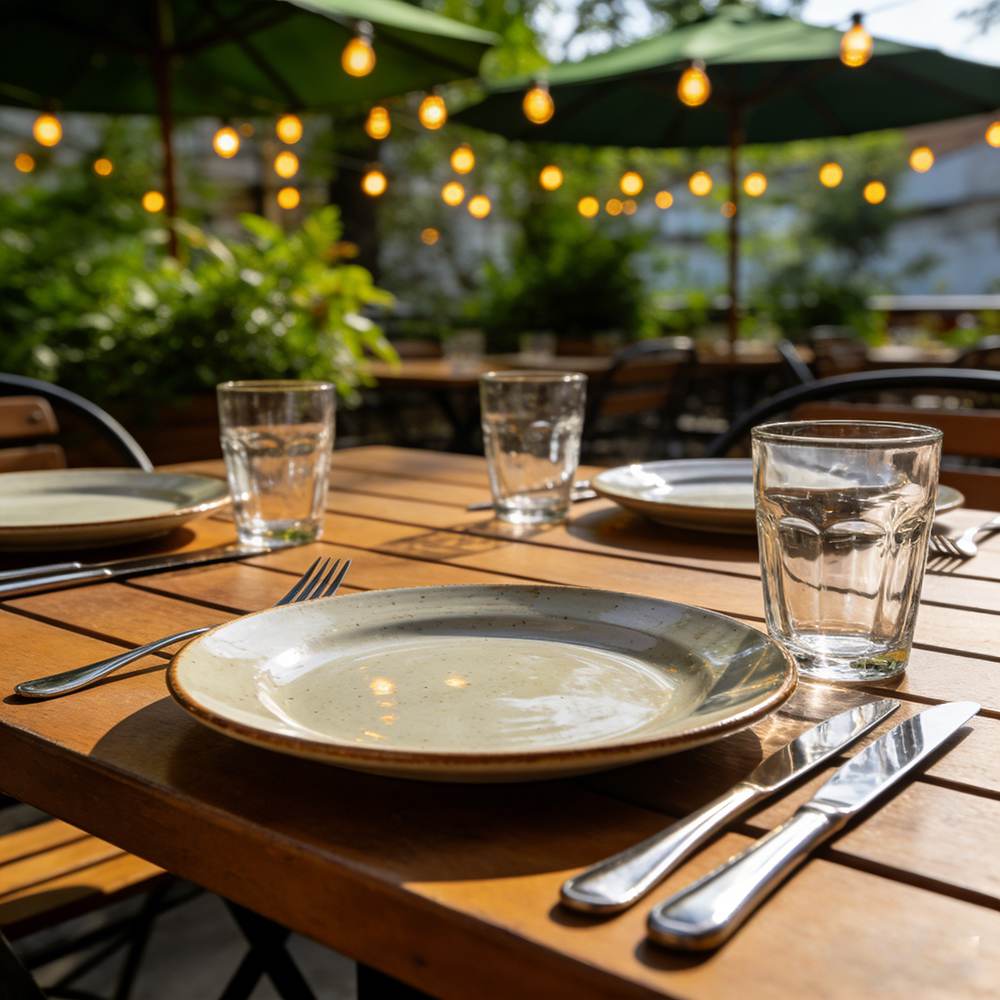
The restaurant industry has gone al fresco. As per the National Restaurant Association, the majority of operators have expanded their dining to outdoor seating capacity over recent years. In fact, around 65% reported having outdoor dining by late 2021, and most agreed that outdoor service accounted for more than 40% of their daily sales. Rooftop dining continues to grab a premium pricing share as guests willingly continue to pay for the atmosphere, open air, and the allure of altitude. However, outdoor dining is much more than just serving meals outside. There is wind speed, sun exposure, temperature swings, and of course, the logistics involved that add to the operational stress on the tableware. Let’s talk about outdoor hospitality tableware, where durable tableware keeps your service running, even when the environment isn’t cooperating. Why Indoor Tableware Can’t Handle Outdoor Dining Outdoor dining is not about having the perfect ambience; it’s the real estate for revenue. This means that patios, rooftops, and pool decks are no longer adaptations to crises but the core profit drivers for outdoor dining tableware restaurants. Yet many concepts continue to use the same indoor porcelain dinnerware for serving outdoors. The wind destabilizes the rims, UV degrades surfaces not designed for outdoor exposure, and due to the thermal shocks, microfractures begin to develop as the dinnerware continues to serve under the sky. As a result, you get increased breakage and shorter replacement cycles. Apart from wind speed and UV exposure, the thermal cycle through the day adds further stress on the ceramic surfaces and glaze. Most concepts expand to an al fresco dining setup and quickly adapt to weather-treated wood furniture. However, unfortunately, the tableware remains the overlooked variable. The US restaurant industry generates approximately USD 900 billion in sales a year, and top urban venues are cashing in by taking dining outdoors. Rooftops, patios, and open-air terraces are all eye-catching and bring in higher checks, but they also require tableware designed to withstand the elements. The Real Benefits of Outdoor Dining Outdoor dining is more than just pleasing the guests. For restaurants, outdoor seating adds capacity, boosts revenue, and enhances the guest experience. The Real Benefits of Outdoor Dining When a restaurant expands its seating plan, it takes a lot of renovation work and layout design. These pose additional costs, and you have to think of the additional space. Compared to expanding indoors, scaling to the outdoors, like your rooftop or terrace, just requires setting up the tables. There’s no major construction or structural overhaul involved. Premium Positioning The best thing about the outdoors is that you don’t have to work on the decor or set up. The view does much of it by itself. The guests are willing to pay more for the view, making rooftops, terraces, and patios high-value seating plans. By pairing the concept with durable, high-quality tableware, like Brett’s Custom Restaurant Dinnerware, operators can deliver a premium experience while protecting margins and reducing replacement costs. Higher Average Spend Per Table When guests are seated with a view like the garden patio or rooftop, the environment encourages them to relax. Instead of rushing through the meal, they prefer to dwell in the ambience. They are more likely to order starters, desserts, or additional rounds of drinks through the sunset or while enjoying the evening lighting. The leisure dining experience means a higher revenue per table without changing the menu prices for the restaurant. Small additions, such as the extra beverage or shared appetizer, further increase the per-cover revenue for the outdoor dining section. Seasonal/Special Events Outdoor dining spaces also become amazing venues for hosting themed dining experiences or events. The space allows you to create new themes without changing the main dining room setup. BBQ night arrangements on the terrace or garden spaces, weekend brunches, sunset cocktail hours, etc., and events of the like further attract guests looking for experiential dining, generating additional revenue streams. The Hidden Costs in Outdoor Restaurant Design Most outdoor restaurant setups focus on seating layouts, heating systems, and flooring. However, tableware remains far from entering the capital planning discussion. In outdoor dining, breakage is not random; it is rather predictable. Wind, UV exposure, and thermal stress all take their toll, making durable dinnerware a critical component of your outdoor restaurant design. Breakage Costs One of the most common recurring small asset expenditures in restaurant service is tableware breakage. The restaurant operators must budget for the continual replacement of dinnerware. According to industry sources, restaurants can experience around 5–10% annual loss due to breakage, theft, and normal wear. So most full-service venues already plan for small wear replacements. However, in rooftop and patio dining setups, the buffer frequently exceeds the range. Again, the added loss can be attributed to the environmental elements and the longer journey from the kitchen to the rooftop, sometimes involving elevators or multiple flights of stairs. Wind Exposure The higher up you go, the wind speed increases. In rooftop dining, even the moderate urban gusts blowing at a speed of 20 to 30Km per hour can destabilize lightweight porcelain plates. This wind speed and force are far more amplified than the street-level weather. When a plate slides or slips in the air, it literally shatters on impact. Many concepts rely on vitrified porcelain given its ability to retain heat and, of course, the elegance, but the material is not designed to bear wind and impact rebound. In these conditions, commercial-grade melamine dinnerware for outdoor use is recommended as it significantly reduces breakage risk. Chlorine and Humidity Outdoor dining near pools or beaches introduces a new set of challenges: chemical and moisture exposure. Serving in a chlorinated environment introduces surface stress onto the dinnerware. It erodes low-grade finishes, and the high humidity weakens the structure over time. For poolside and beachside service, outdoor tableware must be moisture-resistant, non-toxic, and maintain stable color even under prolonged UV exposure. Cost Per Unit vs. Long-Term Value One of the most common mistakes outdoor restaurant setups make when procuring dinnerware is evaluating it