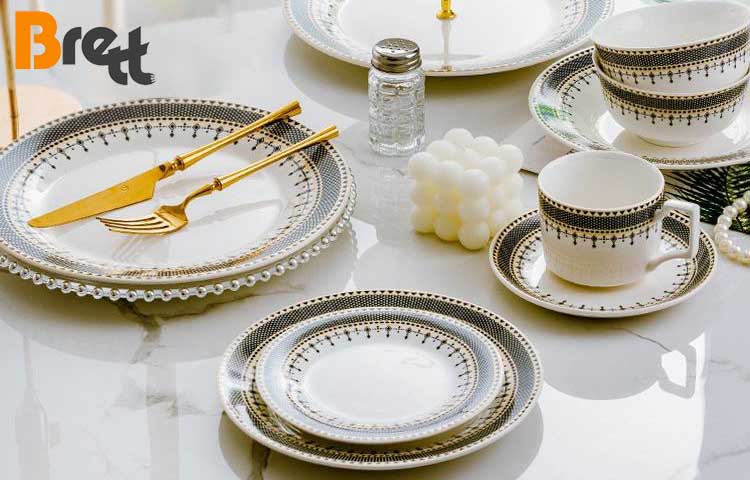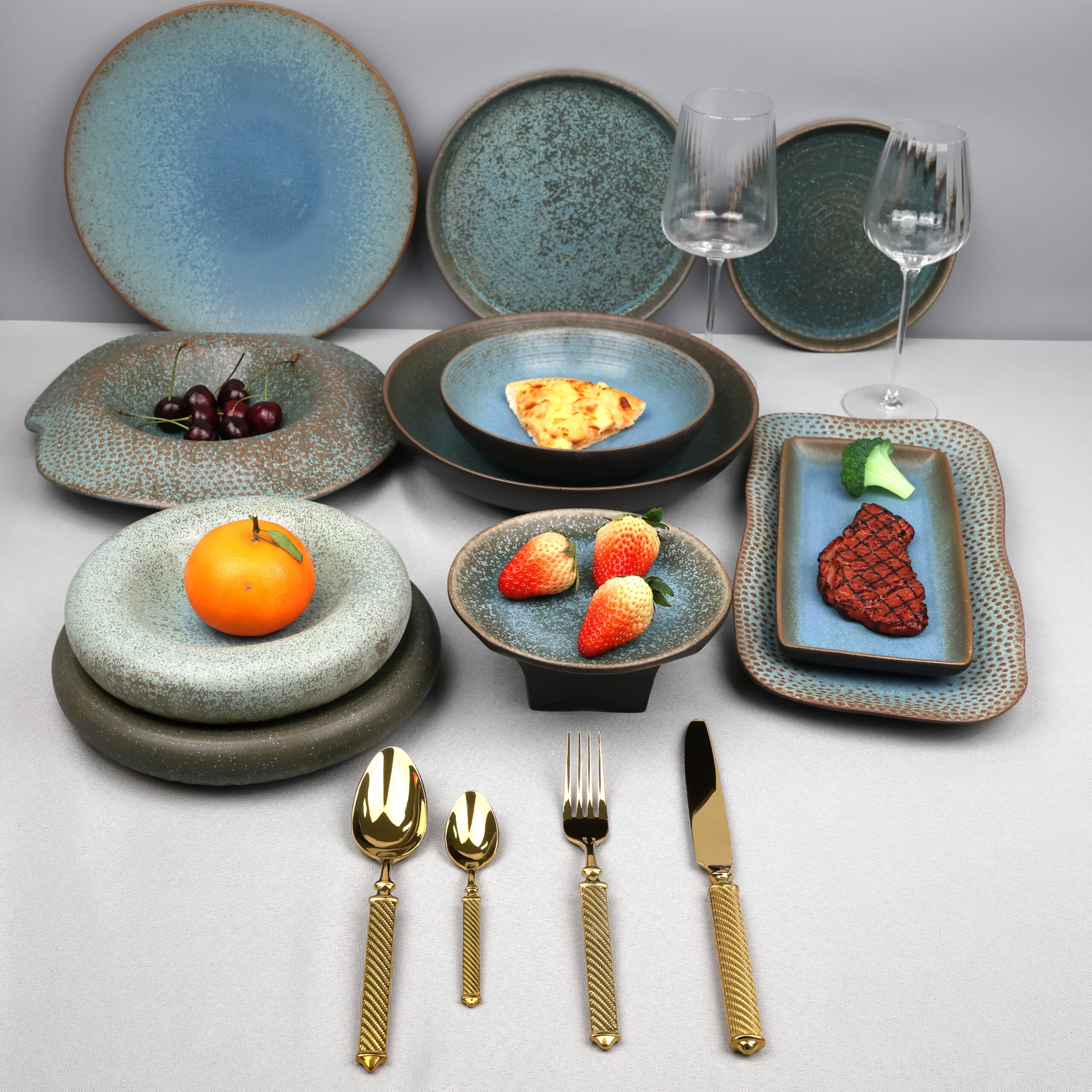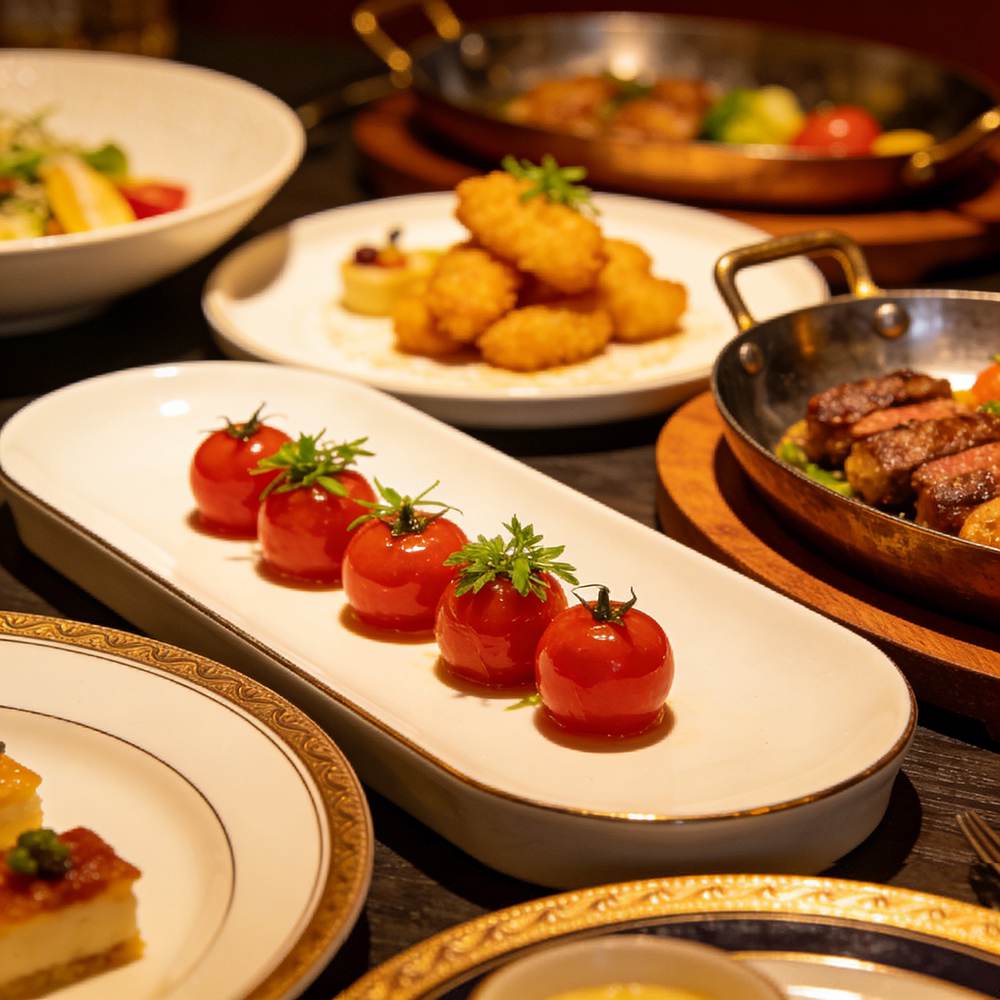
Every dish that leaves your kitchen lands on a surface before it reaches a guest. For individual diners, that’s a plate. For everyone else at the table, at the buffet station, or at the banquet spread, that’s a platter. Restaurant serving platters are where your kitchen’s work becomes your guest’s first impression, and most procurement teams treat them as an afterthought. They buy whatever matches the dinnerware. They order the minimum. They figure it out later. This guide is for the operators who want to think through hotel serveware, catering serveware, and buffet serving dishes before the first event, not after the first problem. Serveware Materials: Strengths, Trade-offs, and Best Applications The material you choose for your restaurant serving platters affects more than how they look on the buffet line. It determines how long your staff can carry them, how well they hold temperature, how they survive a busy Saturday night, and what your replacement costs look like twelve months from now. According to Foodservice Equipment & Supplies Magazine, material selection for serveware should account for heat retention, stackability, staff handling weight, and coordination with existing dinnerware programs. Most operators focus on the first factor and ignore the rest until it becomes a problem. Here is how each material plays out in practice. Porcelain and Bone China Porcelain dinnerware is the prestige choice for presentation serveware, and for good reason. It retains heat well, which matters when a roasted lamb dish needs to maintain its temperature throughout a 45-minute dinner service. The clean white surface works as a neutral canvas, letting the food do the visual work. It coordinates with virtually any existing dinnerware program, which simplifies procurement decisions for hotel F&B directors managing multiple outlets. For fine dining and upscale buffets, porcelain and bone china sit at the top of the list. Bone china dinnerware carries a slightly lighter build with comparable elegance, making it a strong choice when staff are carrying large platters across long dining rooms. The trade-off is straightforward. Porcelain chips and breaks, and it costs more to replace than any other material on this list. In a controlled fine dining environment with trained staff and careful handling, that trade-off is manageable. In a 400-cover hotel breakfast buffet with rotating service teams, it becomes expensive fast. Melamine For high-volume catering serveware and casual buffet service, melamine is the practical standard. It is virtually unbreakable, lightweight enough for staff to carry multiple pieces at once, and significantly easier to handle during rapid replenishment cycles. Modern melamine has come a long way. Current commercial grades convincingly mimic porcelain, slate, and wood finishes, which means you can get the aesthetic without the fragility. A banquet manager running outdoor corporate events where pieces get stacked, transported, and handled by rotating staff will find melamine a far more sustainable choice than ceramic. But the limitation is heat. Melamine should not go into microwaves, ovens, or under heat lamps, and should not be used for hot-hold buffet stations without separate chafer systems. For cold stations, salad displays, and ambient-temperature catering serveware, it performs well. For anything requiring sustained heat retention, it needs a support system. For a deeper look at how melamine compares to ceramic across durability and presentation, that comparison is worth reviewing before committing to a material. Stainless Steel Stainless steel commercial serving trays and platters are the backbone of banquet and large-scale buffet operations. They are indestructible, easy to sanitize to food-safety standards, and available in mirror or satin finishes, depending on the formality of the setting. Where stainless steel earns its place is in chafing dish setups, carving stations, and high-volume buffet lines, where durability and sanitation matter more than food presentation. The limitation is visual. Food sitting directly on bare steel can read as institutional, which works against you in upscale hotel settings or branded catering events. The best applications use stainless steel as an under-platter or chafer insert, with porcelain or melamine as the direct presentation surface above it. That combination gives you the structural durability of steel with the visual warmth of ceramic. Wood, Slate, and Natural Materials Natural materials are earning their place in artisanal, farm-to-table, and charcuterie-focused concepts. A slate board under a cheese selection, or a wooden platter for a shared antipasto course, creates a visual moment that porcelain simply cannot replicate. Each piece carries natural variation, which adds character to specialty presentations. The trade-off is maintenance. Porous surfaces like wood and slate are not dishwasher-friendly, require specific cleaning protocols to meet food safety standards, and are not suited for high-volume daily service. For a boutique hotel running a weekly charcuterie evening or a restaurant with a dedicated sharing board menu, they add genuine value. For a 300-cover breakfast buffet, they create more problems than they solve. Shapes and Sizes: Matching Restaurant Serving Platters to Your Service Size Most procurement teams pick a platter shape because it looks good in a catalog photo. That’s the wrong starting point. Shape determines how much food you can actually display, how your buffet line flows, how staff carry and stack pieces at the end of service, and how much storage space your kitchen gives up every night. So here’s a question worth sitting with before you place an order. Does your platter shape work for your service, or are you working around it? Oval Platters Oval is the classic format for a reason. It handles large, naturally shaped dishes well, whole roasted proteins, seafood displays, carved meats, and carved vegetables without forcing food into unnatural arrangements. On a buffet table, ovals can be angled slightly to add visual movement to an otherwise flat line. The limitation shows up when you’re running a long straight buffet. Oval platters leave awkward dead space between pieces, which affects both presentation and how much you can fit per linear foot of table. Rectangular and Square Platters When your buffet line runs 10 to 12 feet, rectangular buffet serving dishes are the more efficient choice. Placed side by side, they eliminate the gaps that