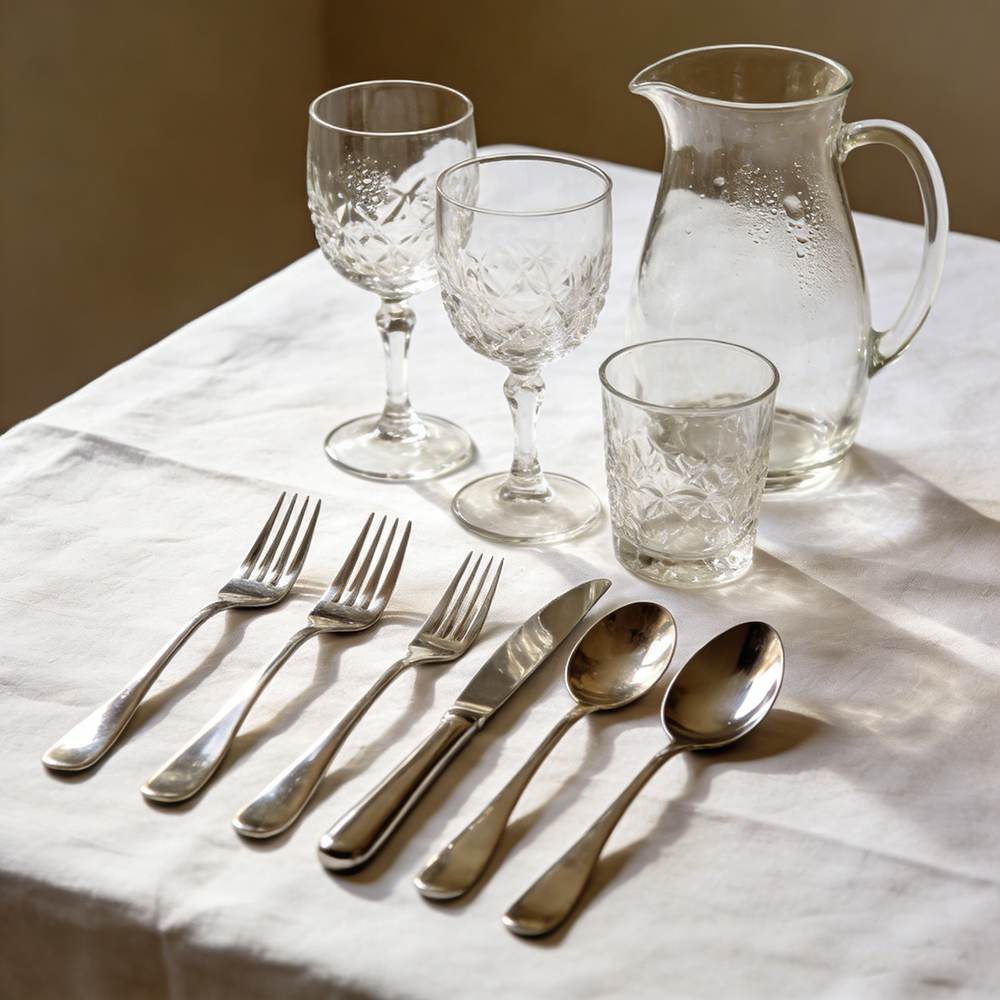
You place a bulk order for flatware and glassware because the price looks right. A few months later, storage is full, replacement pieces are locked behind another minimum order quantity, and the next quote comes back higher than expected. Now you’re stuck deciding whether to reorder, renegotiate, or continue with mismatched stock. This is where bulk ordering usually goes wrong. The issue is rarely the product. It’s the buying strategy behind it. Bulk ordering should make procurement easier and more reliable. When MOQ terms, pricing tiers, and supplier expectations are clear, bulk purchasing improves consistency, reduces long-term costs, and keeps operations flexible as needs change. In this guide, we break down how MOQ strategy, pricing negotiations, and supplier relationships work in bulk ordering for flatware and glassware. What MOQ Means in Hospitality Buying Before you even think about flatware or glassware bulk ordering, you need to get comfortable with one term suppliers live by: MOQ (minimum order quantity). It’s simply the smallest order a supplier will accept because production doesn’t always work in tiny batches. A factory still has to prep machines, allocate labor, and run quality checks, whether you order 100 forks or 5,000. The setup effort stays the same. MOQ exists to make that effort worthwhile. Typical MOQ Ranges for Flatware and Glassware In hospitality procurement, MOQs usually fall into predictable ranges. Flatware often lands between 1,000 and 5,000 pieces per design. Glassware tends to be lower, commonly 100 to 500 pieces per style. The quantity itself is usually fixed, but pricing inside that quantity is where volume discount negotiation comes into play. Why Suppliers Insist on MOQs If you’ve ever wondered why suppliers won’t budge on minimum order quantities, it usually comes down to one thing: efficiency. Making more of the same item at once costs them less. Labor runs more smoothly. Materials go further. Production stays predictable. Smaller orders break that rhythm and eat up time without giving much back. That’s why suppliers are often willing to talk price, but rarely willing to lower quantity. Once you see it from their side, negotiations start to feel less like a standoff and more like a trade-off. How MOQ Impacts Your Buying Strategy MOQs aren’t automatically a problem. In many cases, they work in your favor. Ordering in bulk can mean better unit pricing, consistent quality from a single production run, and fewer surprises down the line. You know what you’re getting, and you get it reliably. The catch is commitment. Bigger orders tie up cash, take up space, and lock you into decisions for longer. If your menu changes or demand shifts, that flexibility is gone. The goal isn’t chasing the lowest possible price. It’s finding the quantity that makes financial sense without creating storage stress or overstock issues. Pricing Structures and Discount Tiers Before anyone says “bulk is cheaper,” it helps to understand how suppliers actually price bulk orders. Most flatware and glassware suppliers use a tiered pricing structure, which simply means the more you commit, the less you pay per piece. Tier 1: Small Orders (Testing and Stopgaps) This is the “we just need a few replacements” tier. Think 50 to 100 pieces at around $5 per unit. It works when you’re testing a new style, replacing breakage, or handling something urgent. The downside? You’re paying the highest per-unit cost because the supplier still has the same setup effort with very little volume. Tier 2: Standard Bulk Orders This is where flatware and glassware bulk ordering starts to feel worthwhile. At 500 to 1,000 pieces, prices often drop by about 30%. A fork that cost $5 now lands closer to $3.50. Single-location restaurants usually live here, especially for annual replenishment. You’re buying enough to unlock savings without overloading storage. Tier 3: Large Bulk Orders At 2,000 to 5,000 pieces, the math changes. Per-unit pricing can fall another 15-20%. This tier fits multi-unit operators or full refresh projects. From a supplier pricing strategy standpoint, this is an efficient production run, so they’re willing to pass on meaningful savings. Tier 4: Strategic Partnership Volume Once you cross 10,000 units, pricing becomes a conversation, not a list. This is where volume discount negotiations matter most. Hotel groups and catering companies often land here, with pricing 50-60% lower than Tier 1. Now let’s make this practical. Take water glasses. One case might cost $30. Buy fifty cases at once, and that drops to about $21 per case. Same product, same quality, but just a smarter bulk order quantity. Tempered wine glasses follow the same logic. A single case may feel expensive, but scale it up, and suddenly you’re saving over 40% per glass. What drives these drops? Material costs, production efficiency, and relationship history. Custom items add setup fees, but spread across MOQ, the per-unit increase stays reasonable. The key takeaway? Pricing isn’t random. Once you understand discount tiers, bulk purchasing negotiations stop feeling intimidating and start feeling predictable. Calculating Your Optimal Order Quantity This is the moment most buyers get stuck. Not because the math is hard, but because of the feeling of “what if we’re stuck with this for years?” Think of economic order quantity as the balance point between what your supplier wants and what actually works for you. The MOQ is their line in the sand. Your EOQ is the number that keeps bulk ordering of flatware and glassware cost-effective without turning your back hallway into a warehouse. 3-Step Calculation Process Here’s how to calculate your optimal order quantity. Step 1: Annual Consumption Say you run a 100-seat restaurant. You keep 100 water glasses in rotation. Breakage runs about 20%, so you replace 20 glasses a year. Now add another 50 for new table settings or events. That’s roughly 70 glasses annually. Not 500, not 1,000. Just 70. Step 2: Pricing Tiers One case costs $30. Five cases drop the per-case price. Ten cases drop it further. Fifty cases look amazing on paper, until you think about where you’ll store them once they’re delivered. Step 3: Yearly