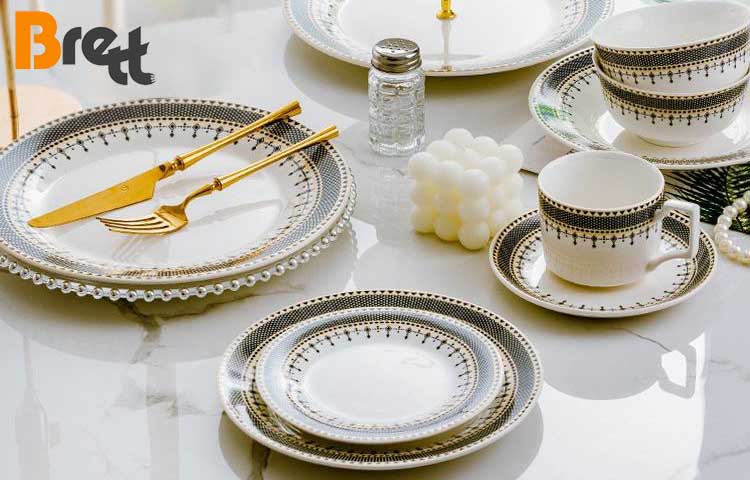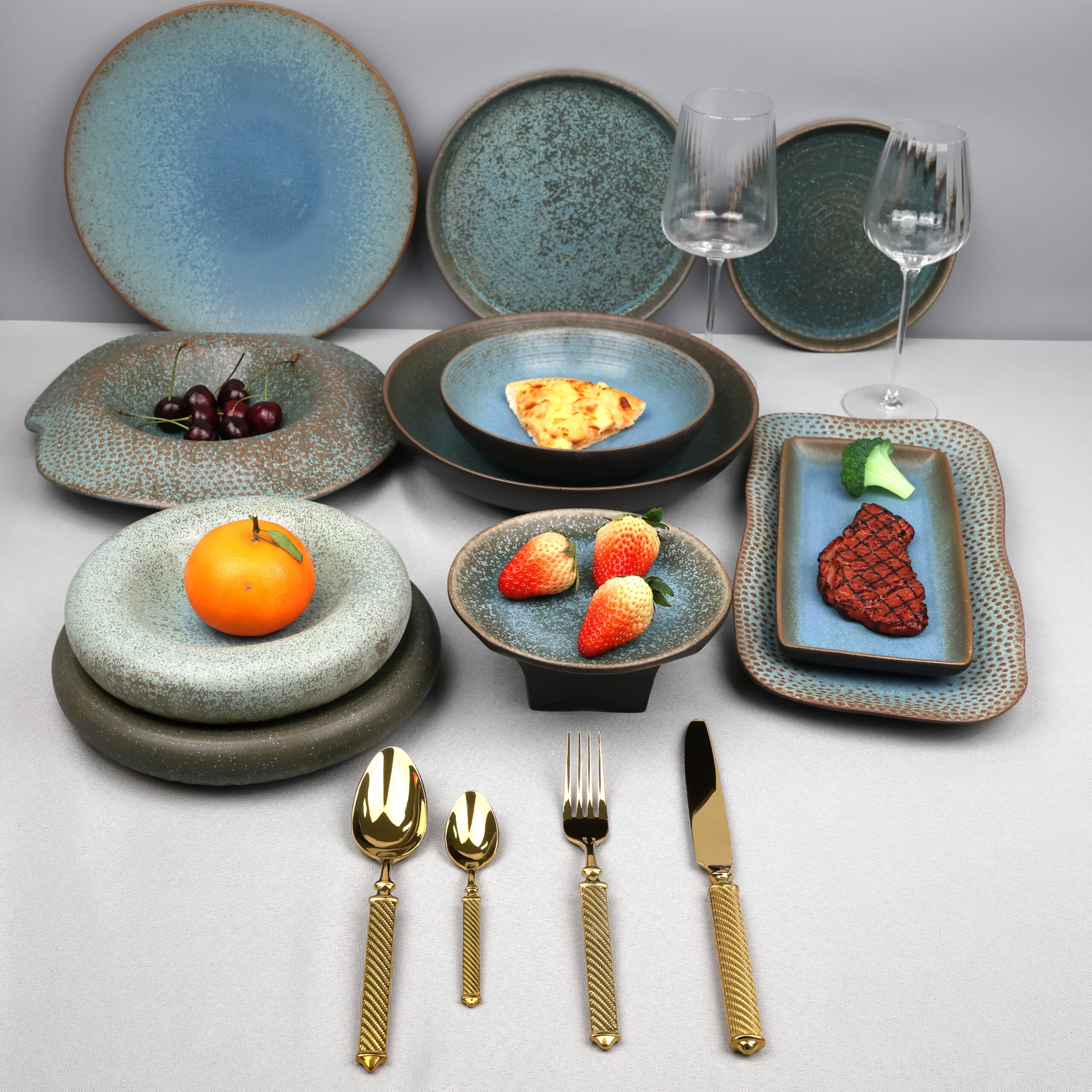
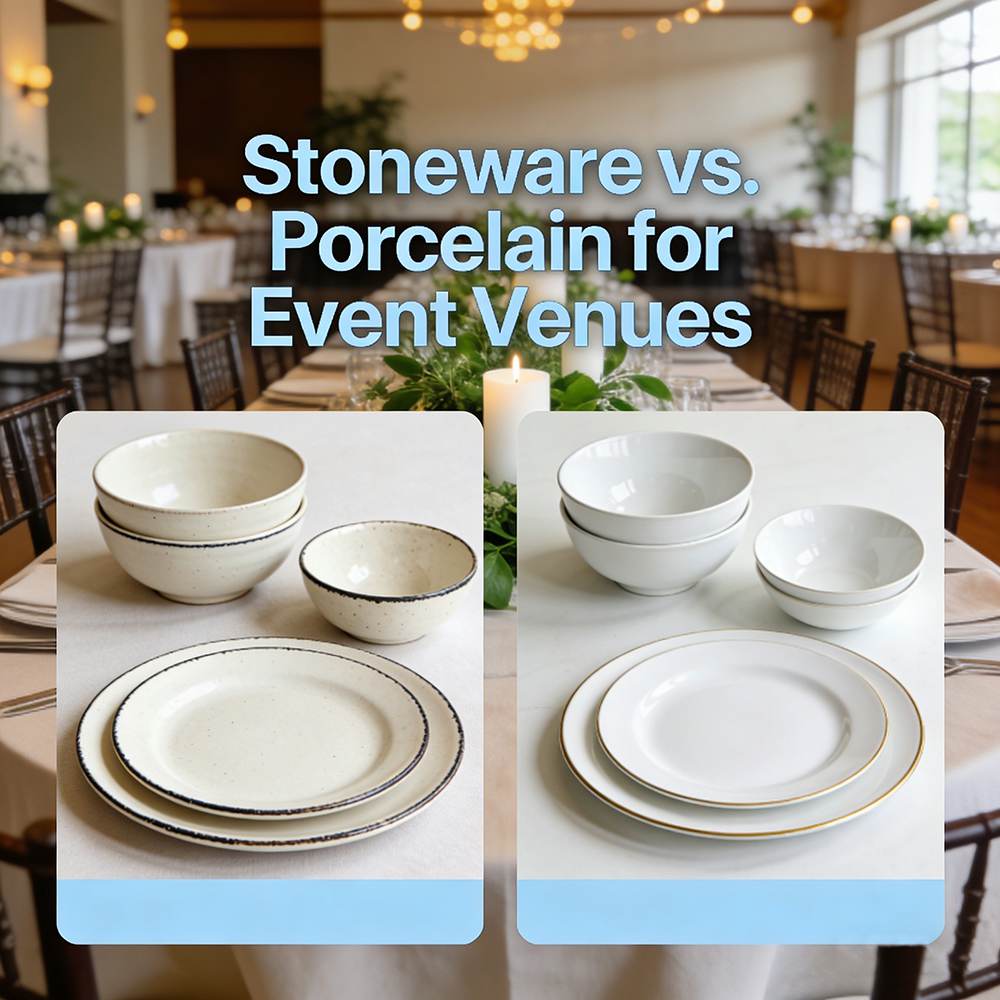
Every event table sends a message before the first course arrives. Plates sit in place, guests take their seats, and the look of the table sets expectations right away. That’s where stoneware vs porcelain for events becomes a practical choice for venues. Both materials appear refined. Both suit formal settings. But they create distinct visual tones and perform in noticeably different ways during service. This guide is built for venues comparing stoneware vs porcelain dinnerware. We’ll discuss how each option affects aesthetic, durability, and long-term use, so choosing dinnerware for your venue’s style feels clear, grounded, and worth your time. Porcelain or Stoneware: Which Material Fits Your Venue Best? Now, you’d expect porcelain to work well for corporate receptions. That clean, versatile, professional look fits neatly into structured events. But the same qualities suit formal receptions just as well. Porcelain stays bright under lighting, keeps the table uniform, and lets the food do the talking. Do you know what that results in? A table that feels orderly, polished, and easy to trust, especially when consistency matters across many events. If you compare that with stoneware dinnerware for venues, you’re taking a more expressive route. Stoneware feels warmer in the hand and more relaxed at the table. The surfaces have character. Sometimes subtle texture. Sometimes visible variation. What does that character do? It adds personality without decoration. In the right setting, it makes the table feel intentional rather than styled. That’s why material choice affects perception. Stoneware vs Porcelain for Event Venues: Material Comparison At first glance, stoneware and porcelain look interchangeable on a dressed table. But once plates are handled, served, and reused across events, their difference becomes apparent. Let’s take a look at porcelain vs. stoneware for events from a material point of view, so venues can understand how each is made and how it performs across different event venues. Porcelain: The Industry Standard for Event Venues Porcelain has earned its place as a default choice in many venues because it stays consistent across a wide range of events. It suits corporate receptions, formal dinners, and large-scale functions. What Is Vitrified Porcelain? Refined clay blended with feldspar and quartz, fired at very high temperatures, creates vitrified porcelain. That firing process seals the body fully, creating a smooth, non-porous surface. What does that lead to? Plates that stay bright, resist staining, and clean easily. The look stays crisp and professional, and batches tend to match well over time. That’s why porcelain dinnerware for venues works when flexibility and consistency matter most. Porcelain does have limits, though. The surface feels cool and formal, and without thoughtful design, it can feel plain. Bright white also puts more responsibility on plating, since food colors need to carry the visual interest. Stoneware: The Artisanal Alternative for Event Tables Stoneware takes a different aesthetic route because it is fired at slightly lower temperatures, and it retains a bit more texture and warmth in the body. What Is Stoneware? Stoneware plates are heavier and more grounded. The surface shows subtle variation even within production runs, giving the table character. That character does something important. It adds atmosphere. In the right venue, stoneware dinnerware for venues supports rustic, contemporary, or chef-driven concepts and photographs beautifully. But the trade-off is care and maintenance. Stoneware stains more easily, so it has to be handled well. Replacements are also needed more frequently, and they fit certain themes better than others. Here’s a quick comparison to bring it together. Factor Porcelain Stoneware Firing temperature High Moderate Vitrification Full Partial Surface Smooth, sealed Textured, warmer Aesthetic Crisp, professional Artisanal, relaxed Versatility Broad Concept-driven Maintenance Simple More care needed Aesthetic Positioning by Event Type: Stoneware or Porcelain? When venues think about aesthetics, the question isn’t which material looks better in isolation, but which one supports the type of event happening in the room? Stoneware vs porcelain for events becomes a visual decision first. The plates set the tone for the event, and that tone has to match the experience being promised at the venue. Porcelain for Clean Formal and Multi-Purpose Events Porcelain works best when the table needs to feel refined and dependable. The surface stays crisp under lighting, the color stays neutral, and the table reads as polished from every angle. This makes porcelain a reliable choice for luxury receptions, award ceremonies, and formal dinners where consistency is part of the experience. Porcelain also fits naturally into contemporary and modern events. Clean lines pair well with minimalist decor, and the bright surface acts as a neutral backdrop for bold plating. In multi-purpose venues that host everything from weddings to corporate dinners, porcelain is the safest visual choice. It doesn’t lean too casual or too expressive, which helps it stay relevant across seasons and themes. When the room changes weekly, porcelain adapts without pulling attention in one direction. It lets decor, florals, and food define the mood instead of the plate. Choose porcelain dinnerware for venues when you want: Clean white plates that feel refined and professional A neutral base supporting formal and contemporary styling Consistent presentation across different event themes Strong visual alignment with linens and glassware A polished table suitable for photography from every angle Plates that feel familiar and reassuring to guests An aesthetic that stays relevant year after year Easy pairing with bold or minimalist plating One look that works across many event formats Stoneware for Warm, Expressive, and Concept-Led Events Stoneware has a completely different aesthetic, which works best when the goal is atmosphere. Farm-to-table events benefit from its warmth and texture, which align naturally with organic menus and natural decor. The surface isn’t perfectly uniform, and that’s the point. For instance, when guests sit down and notice a slight variation from plate to plate, it feels intentional, like someone actually thought about the table rather than ordering the safest option. This is why stoneware works so well for contemporary and artisanal events. If you’re hosting dinners where the menu, décor, and setting are meant to feel creative, stoneware
Bulk Dinnerware Ordering for Events: MOQ, Pricing, and Supplier Negotiation
Have you ever wondered where event organizers often lose money? It’s not broken crockery or post-event replacements; it’s the frequent overpriced bulk purchase orders. When caterers, event planners, and hotels buy dinnerware without planning it out, they end up spending a lot more than they actually have to. So when placing orders with dinnerware suppliers, the less you know, the easier it is to fall for the first quote that comes your way. So what is bulk dinnerware ordering all about? Let’s talk MOQs, negotiations, volume tiers, and lead time planning! What are MOQs and Volume Pricing Tiers? Without understanding MOQs or planning the order, you could actually end up buying the same designed plates from the same supplier but at widely different rates. How is that possible? It’s usually about the order size and timing. MOQ Say you buy 500 units from a supplier first. It feels like a safe choice. You don’t want to over-order, and 500 is also their dinnerware MOQ (Minimum Order Quantity). But then later, demand increases, so you order 1000 more units. But now the price per piece drops, and the supplier may even waive the shipping fee. Then demand rises again, and you place another order for 500 units. So instead of placing a single planned bulk order, you’ve now placed three orders. You paid the shipping thrice and unlocked a better deal on one of them. This is what bulk dinnerware ordering is all about. It starts with the MOQ, which becomes the gatekeeper for your pricing tiers. The higher (and better planned) your order, the more leverage you have on price and terms. Volume Pricing Tiers Many suppliers use tiered pricing structures where the unit price decreases as the order volume increases. These tiers reward large orders with better discounts to encourage buyers to buy in bulk. So you might find suppliers offering small discounts for small bulk orders or MOQs. Then, larger percentage discounts for mid-range bulk orders, and the best prices for very large order quantities. They might also offer shipping concessions and other incentives with these orders. Although the exact discount levels vary by supplier and product, the percentage of discount usually grows with the order size. Experienced buyers know about these dinnerware volume pricing tiers. This is why they consolidate their orders. So, as in the example above, they plan their purchases. Instead of purchasing dinnerware thrice a year, they place a bulk order once and bag the best deals. Bulk Dinnerware Ordering for Events: How it Works So, how do we place dinnerware orders in bulk? Here’s a little guide on how to talk to the suppliers and grab the best deals. The First Quote When you place a dinnerware order, keep in mind that the price is rarely ever fixed. The first quote you get off the website or from the supplier themselves is usually just a test. It’s their way of checking: How serious are you about placing the order? How price sensitive are you? Your knowledge of wholesale dinnerware pricing tiers. If the seller senses you are uncertain or exhibiting any sign of one-off buying behaviors, they will protect their profit margin. So give them a feeling that you’re serious and plan your orders strategically. That way, you can unlock better pricing, negotiate shipping, and take full advantage of volume discounts. Structure the Conversation When you are negotiating with the sellers, don’t attack their quoted price. Instead of saying it’s too high, ask them questions as a knowledgeable buyer. Ask them these questions: How does the price change if I order a larger quantity? What would the unit cost become if I plan future orders with you? Can adjustments to packaging or lead time reduce the overall cost? This way, you’ll be protecting their reputation as well as margins. As a result, you are likely to get more structural concessions. Trade Certainty for Cost Suppliers want predictability in the deal. They are never going to squeeze their margins. When you understand this, you can gain the upper hand in the negotiation. Ask them direct questions mentioning clear quantities you want to purchase instead of referencing flexible ranges. Talk about firm timelines instead of vague details. Then mention consolidated SKUs. When you talk about these specifics, you will sound like an informed buyer. You’ll become a priority lead who is actually there to make the real deal and not to waste their time. This will up your chances of getting the best deals possible from them, too. Use Silence As a Negotiation Tool Another great tactic to win at negotiations is to use silence or a pause. Do not respond immediately to the offer. In fact, wait or pause before you respond. What happens when you do that is that suppliers assume you are comparing options. This way, your chances of receiving a quote revision increase. Remember that negotiation is not a one-time win. Usually, you get the top offers on your second or third order. That’s because, by that time, you are established as a high-volume buyer that the suppliers will want to retain. Factors to Consider Before Placing Your Bulk Dinnerware Order Instead of rushing to place your order, take a strategic pause. Of course, it’s natural to feel drawn to the first supplier who comes your way. You may feel rushed to take up the cheapest offering, too. But before you confirm your purchase, consider these elements so you get the best value and avoid hidden costs. Annual Volume and Storage Capacity First, calculate how many bulk event plates you actually need for the year. Calculate the demand for seasonal peak times and any high-demand events you’re expecting through the year. This approach keeps you from overestimating the requirement. Buying too much could tie up unwanted capital in the inventory. Too little can lead to placing rushed orders later on, which, of course, become more costly. So make sure you plan out your annual volume first. Then, negotiate with the supplier