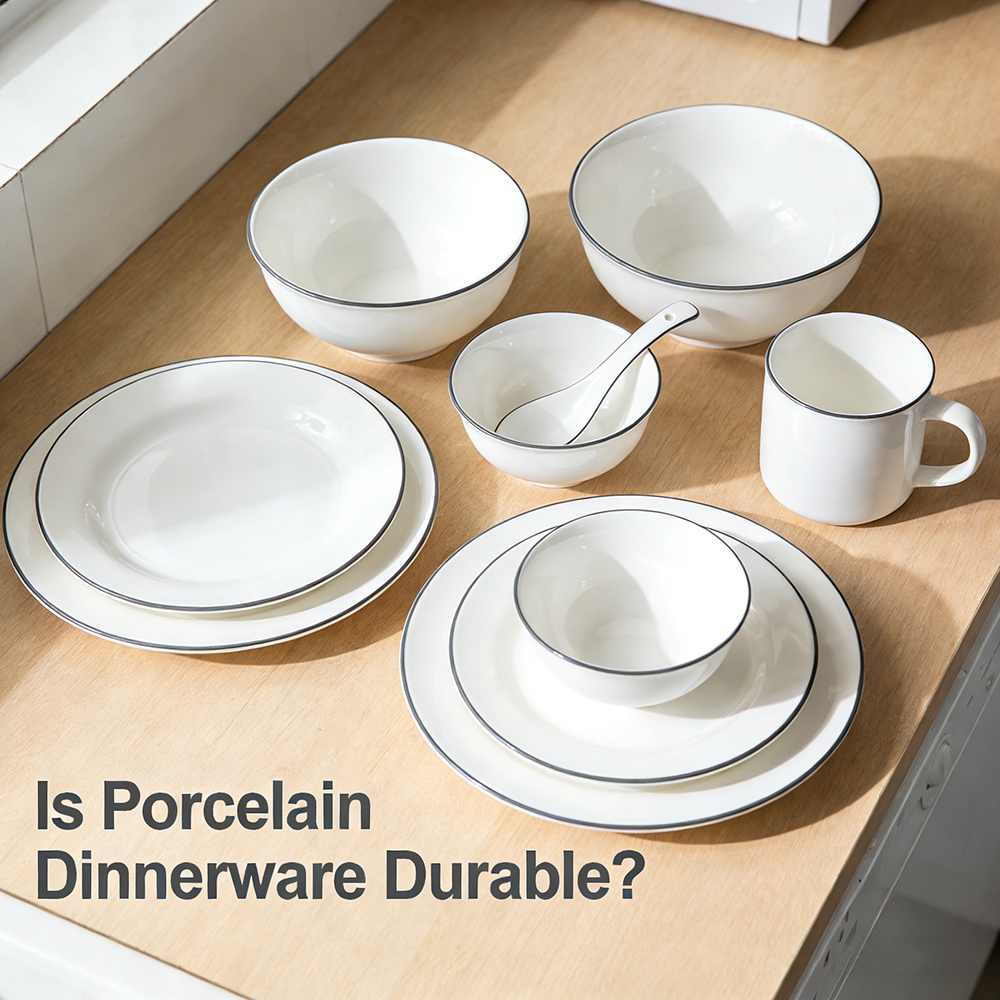
Porcelain dinnerware has long been associated with elegance, fine dining, and timeless design. But beyond its refined appearance, many buyers—especially homeowners, restaurant operators, and hospitality professionals—ask a very practical question: is porcelain dinnerware durable? The quick answer is: Yes, porcelain dinnerware is durable. In this article, we’ll take a clear, realistic look at porcelain’s durability, how it performs in daily use, its strengths and weaknesses, and whether it truly holds up over time. Along the way, we’ll also answer some of the most common questions buyers ask before choosing porcelain dishes. What Is Porcelain Dinnerware, Exactly? Porcelain is a type of ceramic made from refined clay (primarily kaolin), fired at extremely high temperatures—typically between 1,200°C and 1,400°C. This high firing process vitrifies the material, meaning it becomes dense, non-porous, and strong. According to Wikipedia’s entry on porcelain, this vitrification is what gives porcelain its characteristic hardness, translucency, and resistance to moisture. If you are interesting in knowing the complete explanation and more information about porcelain, you can visit Wikipedia to read more. This combination of density and refinement is key to understanding porcelain’s durability. Is Porcelain Dinnerware Durable? The short answer: yes, porcelain dinnerware is durable—when it’s well made and properly used. Porcelain is actually harder and more compact than many other ceramic materials, including earthenware and most stoneware. Because compare to the materials mentions above porcelain has its strength that comes from: High firing temperatures Low water absorption (often below 0.5%) Tight clay structure with minimal air pockets That said, “durable” doesn’t mean “unbreakable.” Porcelain is strong, but like all ceramics, it can chip or crack if dropped or mishandled. Is Porcelain Good for Everyday Dinnerware? This is one of the most common concerns for the people hesitating which type of dinnerware to buy, for the question the quick answer is: Yes, porcelain is very good choice for everyday dinnerware. In fact, nowadays modern porcelain dinnerware is widely used in our daily around, include: homes, hotels, cafés, restaurants, airline catering, etc. Especially commercial catering, many professional kitchens will like to choose porcelain dinnerware, because it balances durability with a refined appearance. Why Porcelain Works for Everyday Dining It is microwave-safe(unless it has metallic decoration) It is dishwasher-safe It resists stains and odors It maintains its appearance over time High-quality porcelain dinnerware is designed to handle repeated washing, temperature changes, and daily handling without degrading quickly. Advantages of Porcelain Dishes To fully answer “is porcelain dinnerware durable”, it helps to look at its advantages in detail. 1. High Strength-to-Weight Ratio Porcelain is thinner yet stronger than many other ceramics. This means plates can feel light in hand while still being structurally sound. 2. Low Porosity Because porcelain is vitrified, it absorbs very little water. This makes it: More hygienic Less prone to staining Resistant to odors This property is especially valued in food-service environments. 3. Heat Resistance Porcelain handles heat well and is suitable for: Hot food service Microwave reheating Warm dish presentation 4. Long-Term Appearance Porcelain retains its color and glaze better than many alternatives. Whites stay white, and patterns remain crisp over years of use. 5. Professional Aesthetic Porcelain’s clean lines and smooth surface are why it remains the standard material in fine dining and upscale hospitality. Disadvantages of Porcelain Dishes While porcelain is durable, it’s not without drawbacks. 1. Impact Sensitivity Porcelain is hard but not flexible. A sharp impact—especially on edges—can cause: chipping, cracking or breakage. This is why proper storage and handling matter. 2. Higher Initial Cost Compared to stoneware or earthenware, porcelain often costs more due to: Higher firing temperatures More refined raw materials Stricter quality control However, many buyers find the longer lifespan offsets the upfront cost. 3. Decoration Limitations Some porcelain pieces with: Gold rims Platinum accents Hand-applied metallic decals This decoration make porcelain dinnerware shine, but also bring limitation which may cause the dinnerware not microwave- or dishwasher-safe, even though the porcelain body itself is durable. If you interest in read more about dinnerware microwave-safe topic, you can check our blog post “Are Gold Rimmed Plates Microwave Safe?” Does Porcelain Dinnerware Scratch Easily? This is a common concern of dinnerware not only porcelain, especially for households using metal cutlery. The Short Answer is: Porcelain itself is very scratch-resistant.However, some observant friends may notice that scratches are left on porcelain plates after using knives and forks. Isn’t this evidence that porcelain is not scratch-resistant? What people often mistake for scratches are actually metal marks left behind by stainless steel utensils. What is metal marks? Porcelain is harder than most cutlery metals. When a fork or knife rubs against the surface, it can leave a gray mark—this is metal transfer, not damage to the porcelain. According to materials science principles outlined in ceramic engineering references, the glaze on porcelain is designed to resist abrasion, not absorb it. How to Remove Metal Marks You can remove the metal marks by the following methods: Use a mild abrasive cleaner or baking soda Avoid harsh steel wool Regular cleaning prevents buildup With proper care, porcelain plates maintain a smooth surface for many years. Porcelain vs Other Dinnerware Materials (Durability Perspective) Material Durability Porosity Daily Use Earthenware Low High Limited Stoneware Medium–High Medium Good Porcelain High Very Low Excellent Porcelain sits at the top when balancing strength, hygiene, and aesthetics. More comparison between these three materials you can check our previous blog “Earthenware vs Stoneware vs Porcelain: Complete Dinnerware Comparison” Why Porcelain Is Widely Used in Hospitality Hotels and restaurants don’t choose materials lightly. Porcelain remains dominant because it: Withstands frequent washing Looks professional under all lighting Supports consistent food presentation Meets food safety standards globally This is why manufacturers continue to invest heavily in modern porcelain dinnerware collections that combine durability with contemporary design. How to Make Porcelain Dinnerware Last Longer Although porcelain dinnerware is famously durable, even the toughest tableware enjoys a longer, happier life when treated the right way. A little proper use and thoughtful care can go a long way—and that’s never a bad deal for us (or our plates). Now, let’s take a look at a few practical