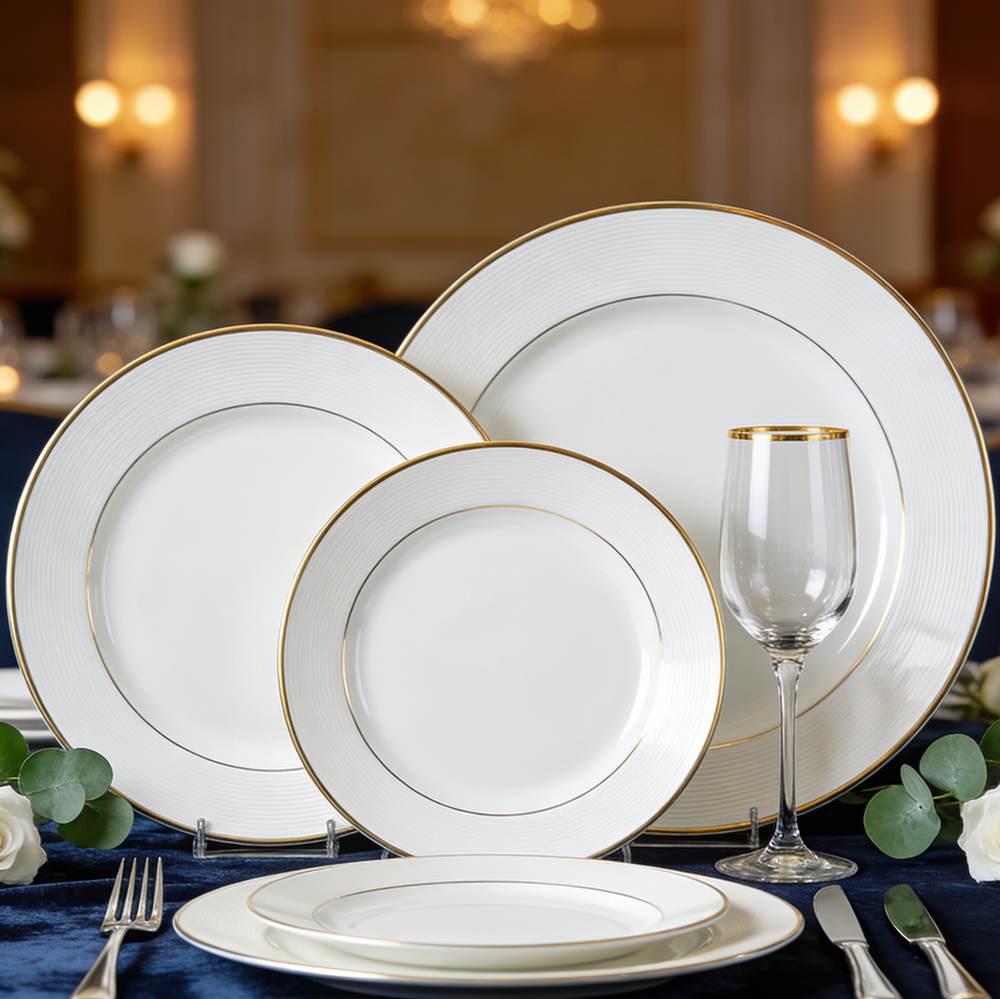
If you run a banquet hall, one weekend you’re hosting a wedding for two hundred guests, the next it’s a corporate dinner, then maybe a birthday or a conference lunch. Every event looks different, but the plates still need to hold up through all of the events. They get stacked, washed, and reused constantly. That’s why choosing banquet hall dinnerware is about finding pieces that can handle service without becoming a problem six months later. Let’s talk about what actually works in banquet settings and how the right dinnerware choices save time and money. Dinnerware Requirements by Banquet Type Plates need to look good enough for weddings and galas, but tough enough to survive back-to-back events, quick turnovers, and busy staff. What works beautifully for one type of venue can feel completely wrong for another. That’s why banquet dinnerware choices usually come down to how the space is used day to day, not just how it looks in photos. Here’s how different banquet settings usually approach dinnerware and why the right fit makes such a big difference over time. Luxury and Fine-Dining Banquet Halls In upscale venues, presentation carries weight. Guests notice details even if they cannot explain why something feels polished. This is where bone china fits best. It feels refined in the hands, photographs beautifully, and holds up well when cared for properly. These spaces usually choose classic shapes and soft tones like white, cream, or ivory. Subtle logo placement or a gentle rim detail adds identity without pulling focus from the food. While this category sits at a higher price point, the durability and visual consistency justify the investment over the years. Contemporary and Upscale Event Spaces Contemporary and upscale venues usually host a mix of weddings, corporate dinners, and private events, so flexibility really matters. Premium vitrified porcelain works well here because it’s durable without looking heavy or overly formal. Slightly larger plates give chefs more room to play with presentation, while neutral shades or soft signature colors make it easy to adapt the table to different themes without starting from scratch. Casual and Multi-Purpose Banquet Halls High-volume spaces need reliability first. Commercial-grade porcelain is the practical choice. It handles frequent washing, quick resets, and constant movement without fuss. These venues usually stick to simple shapes and familiar colors that work across many event types. Custom branding is minimal or optional, focusing more on longevity than detail. The goal here is consistency, easy replacement, and plates that perform well even when the schedule is packed. Quick Comparison: Dinnerware Choices by Banquet Type The right dinnerware choice usually comes down to how often you host events and how polished you want the experience to feel over time. Here’s a quick summary. Banquet Type Best Material Look and Material Durability Best For Luxury / Fine Dining Bone China Soft, elegant, refined High Weddings, galas, premium events Contemporary / Upscale Premium Porcelain Clean, modern, versatile Medium-high Corporate dinners, upscale socials Casual / Multi-Purpose Commercial Porcelain Simple, practical, reliable High High-volume events, community halls Critical Specifications and Durability Standards When you’re choosing banquet hall dinnerware, looks matter, but performance decides everything. Plates in event spaces go from storage to service to wash racks, sometimes multiple times in one day. That’s why durability standards matter just as much as design when choosing banquet plates or event tableware. What Banquet Hall Dinnerware Needs to Handle Durability isn’t optional for banquet hall dinnerware, as they host frequent events. Plates should comfortably survive thousands of wash cycles without losing their finish or strength. A good benchmark is dinnerware built for long-term use, not seasonal service. Thermal tolerance also matters more than most people expect. Plates regularly meet hot entrees, warming lamps, and rapid temperature changes. Materials that handle heat smoothly prevent cracking and stress damage. Non-slip bases are another consideration. They keep plates steady on linen-covered tables and reduce accidents during fast-paced service. Strong edges also matter because most damage happens during stacking and clearing. Why These Details Matter in Service Banquet halls run several events per week, sometimes back-to-back. That means plates are handled by different teams, washed repeatedly, and stacked quickly. A chipped rim or cracked edge during service does more than cause inconvenience. It disrupts the presentation, slows the staff, and breaks the flow of an event that guests paid for. Durable banquet plates maintain consistency even when staff changes or schedules get tight. When replacements match, the room still looks polished months or years later. Safety, Certification, and Long-Term Reliability Commercial dinnerware should meet food safety standards and be built for professional use. FDA compliance is essential for food contact. Certifications like NSF or ISO show that manufacturing follows a consistent quality system, which matters when reordering years later. Customization, such as logos, colors, and finishes, should be applied in ways that last through washing and daily use. Most importantly, your supplier should be able to reproduce the same look long after the first order, so your banquet hall never feels mismatched. The Complete Table Setting Ecosystem When people picture a banquet setup, they think of the plate first. But in event spaces, the plate is just one part of a much bigger picture. What guests actually experience is the full table setting working together. When the event element feels connected, the whole room feels intentional. A complete table setting usually includes more than just dinnerware. It’s the mix of shapes, finishes, and textures that sets the tone for the event. What a full tableware setup usually includes: Dinnerware foundation:Dinner plates, salad plates, bread plates, and soup bowls from the base. These pieces carry the food and set the visual mood from the first course to the last. Charger plates: Often glass or metallic, chargers add depth and presence to the table. They sit beneath the dinner plate and instantly elevate formal events or weddings. Flatware: Stainless steel in polished, matte, or brushed finishes. The weight and feel matter more than people realize, especially during long seated meals. Glassware: Water