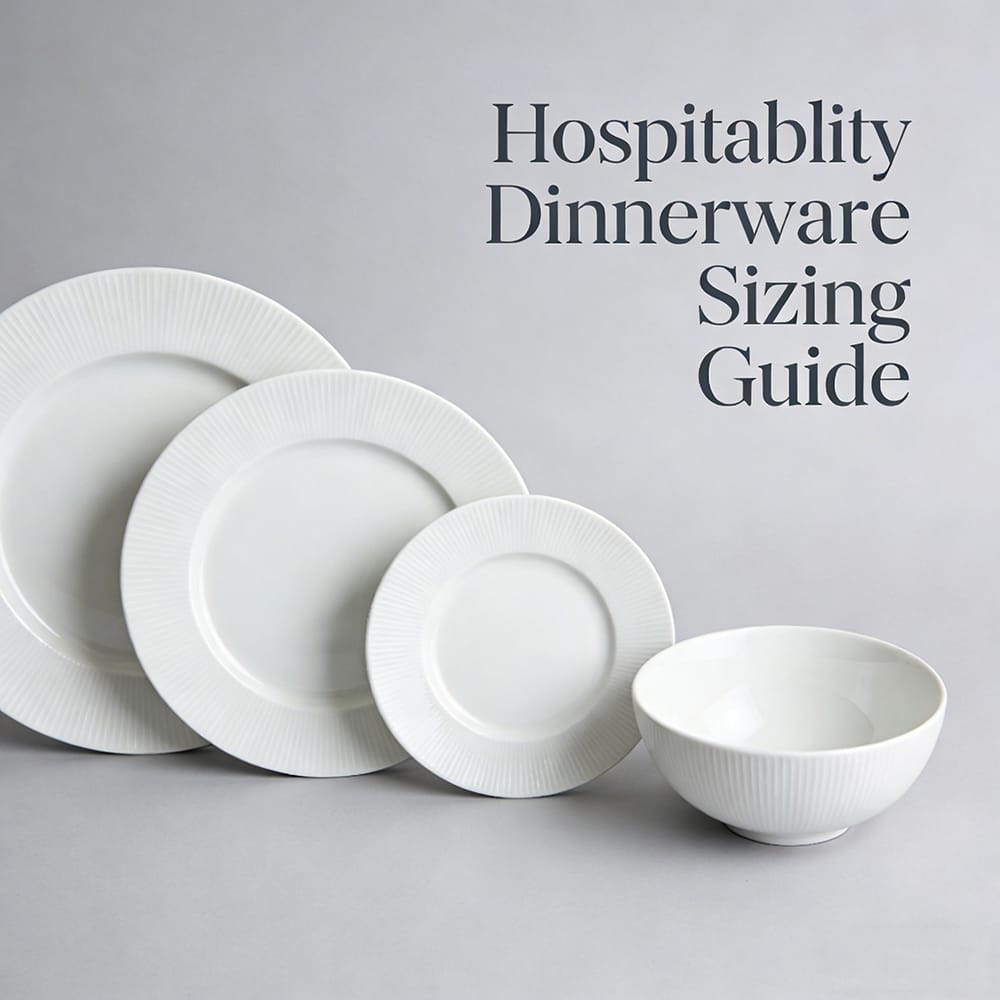
What if you learn that by simply swapping your plate size, you can save up to USD 300 to USD 600 a day? That too, without changing your menu or portion quality? Instead of using the standard 12-inch dinner plates, use 10.5-inch plates. With decreased space to fill, deliberately add 1-2 ounces less of, say, protein, the most expensive item. The dish will still appear full and balanced. Customers too won’t notice the difference either. But the cost savings are much noticeable: 1-2 ounces less of protein can save up to USD 2 to USD 4 per cover. Multiply that by 150 servings, and you get around USD 300 to USD 600 savings every day! Size matters, even if it’s a half-inch difference in the size of dinner plates. Putting it in monetary terms, restaurants and food businesses, using the right dinnerware, save up to 10% to 15% on annual food costs. Let’s learn how to choose the right dinnerware. Quick Dinner Plate Sizes Chart Here is a quick reference table for the standard sizes of dinner plates. Plate Type Standard Size Common Uses Portion Size Dinner Plate 10.5-11″ Main course, plated entrees 6-8 oz protein Salad Plate 8-9″ Appetizers, salads, sides 3-5 oz Bread Plate 6-7″ Bread, butter, small items Individual serving Bowl (soup) 8-10″ diameter Soups, stews, pasta 8-12 oz liquid Bowl (side) 6-8″ diameter Sides, desserts 4-6 oz Platter 12-14″ Sharing, family-style 2-4 servings Charger Plate 13-14″ Under-plate (decorative) N/A (no food) Plate Size Standards The plate size isn’t about the looks only. It’s basic economics. Larger plates need to be filled with more food. So, your ingredient costs go up with them. Midsized plates, on the other hand, make the meal feel balanced and don’t raise your costs either. The size of the plate has a subconscious effect on the minds of the customers. Food placed on a large plate appears smaller. Placed on a smaller plate, it looks like it’s too much. When we eat from a small plate, we feel full sooner. But when eating from a large plate, the same amount can feel smaller. To help restaurants standardize portion control and presentation, here’s a look at industry-standard plate sizes. Saucer: Most saucers are 5 1/2 to 6 1/2 in diameter. Usually, the size depends on the mug or cup, as they are manufactured to match the size. Appetizer Plate:This is usually the smallest plate on the dining table. It typically measures 4 to 5 inches and displays a single or small item. Side Plate:These measure 6 to 7 inches and are used for serving bread or placing napkins on the table surface. Dessert Plate: Dessert plates are a bit bigger and measure 8 to 10 inches in size. Dinner Plates: Dinner plates have a diameter of 10.5 inches. But recently, many restaurants have started opting for 11 to 12-inch plates, with wider lips/frames. Soup Plate:The soup plates are a hybrid between the dinner plates and the soup bowls. These usually measure 8-10 inches. Browse Brett‘s plate sizing options here. Plate Size By Restaurant The plate size is one of the least glamorized cost control measures for the food business. Your guests judge the value of the food much longer before they start eating it. Fine Dining Usually, in fine dining, these are the plate sizes used: Dinner Plate:Dinner plates are typically 9-10 inches. These are ideal for centered presentations too. 30-40% of the plate remains visible with blank white space for a visual impact. Salad Plate: Salad plates are usually 7–8 inches. These are used for the appetizers or salad courses, holding 3–5 ounces of salad with 1–2 ounces of dressing. Bread plates: These are 5–6 inches. These serve individual portions like a single roll or a few slices. Soup bowls: These are 7–8 inches in diameter. They make the soup serving look elegant and balanced. Upscale Casual Dining Dinner Plate:Dinner plates are typically 10.5–11 inches in casual dining. These allow a balanced serving of 5 to 7 ounces of protein, 3 to 4 ounces of starch, and 3 to 4 ounces of vegetables. About 20–30% of the plate remains visible for presentation. Salad Plate:Salad plates usually measure 8–9 inches. They are for the appetizers, salads, or shared first courses. Bread Plate:Bread plates are 6–7 inches. They serve individual portions, like a single roll or a few slices. Soup/Pasta Bowl:These bowls are 8–10 inches. They can have an 8–12 ounce capacity. They serve soups, stews, or pasta dishes. High-Volume QSR Dinner Plate Sizes Dinner Plate:Dinner plates are generally 11–12 inches in high-volume QSR. They can easily accommodate generous portions of meat, vegetables, and sides. Even with a 10-20% free space, they still look a treat for the eyes. Salad/Side Plate:These plates are 9 inches, sized for larger portions of sides or salads. Soup/Pasta Bowl:These bowls range from 10 to 11 inches. They have a capacity to hold 10–14 ounces. Portion Control and Its Impact on Cost Portion control isn’t just for the customer; it directly influences the bottom line. The plate size directly influences the perception of how much food the customer feels they are served. When we use smaller plates, they make the portion appear larger. Whereas large-sized plates can make the same amount look small. But slightly changing the serving size, like going from 12 to 10.5 inches as we discussed, can yield huge savings over the long term. The dinner plate sizes also have a huge effect on how the handler perceives the serving. On a 9-10-inch plate, the portion looks 30-40% larger, making it ideal for fine dining. While on a standard 10.5-11-inch plate, the 6-7-ounce portion will look balanced and well-proportioned. Hence, it’s the best size for casual restaurants where value and quality are both important. Plating Guidelines for Different Cuisines The cuisine you intend to serve can dictate a lot about the layout and spacing on a plate. Most fine-dining and contemporary restaurants rely on 9 to 10-inch plates now. They place everything precisely well-spaced on the plate. Nothing
Commercial Dinnerware Durability: Testing Standards & Performance Data
Opening a new dining place or refreshing your tableware usually feels like a simple decision. The plates look right, the price fits the budget, and the supplier promises they’re built for commercial use. Then the service starts. Dishwashers run nonstop. Stacks move faster. Staff handle plates under pressure. Within a few months, replacements creep into the order lists, and costs rise. Most operators don’t expect dinnerware to fail this way. The problem is that durability isn’t a label. It’s the result of materials, testing standards, and kitchen conditions. This guide explains how commercial dinnerware is tested, where it breaks, and how durability decisions affect long-term costs. What Is Durability in Commercial Dinnerware? When suppliers talk about durable dinnerware, it’s easy to picture a plate surviving a drop. That’s part of it, but it’s not the full story. Two plates look identical on the shelf and still behave very differently once service gets busy. One keeps its edges clean and surface smooth, while the other starts showing wear within weeks. In commercial kitchens, plates rarely fail because of one dramatic moment. They wear down day after day. The plates get stacked tightly in racks. They slide against other plates during clearing. And they also move from heat lamps to prep tables. Commercial dishwashers that run hot all day long with aggressive detergents also wear down the plates over time. None of this looks extreme on its own, but together every factor adds up. That’s why durability isn’t about whether a plate breaks once. It’s about how the plate handles repeated strain without changing shape, losing its finish, or chipping at the rim. Durability is about how the plate behaves on its 500th wash, not its first service. For restaurant and hotel operators, the difference determines replacement rates, consistency on the table, and how predictable costs stay over time. Food Safety and Quality Certifications Certifications might not seem that important until something goes wrong. You buy a new dinnerware set, and a plate stains oddly. The glaze wears faster than expected Now, food safety becomes questionable. Here’s a breakdown of food safety certifications and how they affect quality. FDA Food Contact Compliance If a plate touches food in the US, it falls under FDA food contact rules. That includes the glaze, decorative layers, and any finish on the surface. FDA compliance isn’t a marketing upgrade, but it’s more of a legal requirement. What the FDA actually evaluates is migration. In simple terms, testing checks whether substances like lead or cadmium leach out from the plate into food during use. That includes hot dishes, acidic sauces, and repeated dishwasher cycles. The limits are strict, and they’re designed around long-term exposure, not a single-time use. For operators in hospitality, this matters because problems never arise immediately. They appear months into service when plates have been washed hundreds of times and hold hot food every day. FDA compliance means the dinnerware has been reviewed and authorized for that exact kind of commercial use. ISO 9001: Why Process Control Affects Durability Instead of testing plates, ISO 9001 tests the manufacturer. This certification confirms that a factory follows documented quality systems: how materials are selected, how glazing is controlled, how pieces are inspected, and how defects are handled. In hospitality terms, this translates to consistency. Two plates look identical on day one, but six months later, one chips faster, fails sooner, or warps slightly. The difference usually comes down to process control, and it’s not a design issue. ISO 9001 enforces repeatable production standards, staff training, and batch tracking. Restaurants feel this through lower replacement rates, fewer mismatched reorders, and less variation across shipments. How This Applies in Hospitality Settings Most guests will never ask about certifications, but operators pay for their absences. Service-grade dinnerware is about predictability under stress, heat, washing, stacking, and time. Brett’s manufacturing follows FDA food contact requirements and ISO 9001 quality systems, which means operators aren’t guessing how plates will behave after hundreds of services. These certifications remove risk from daily hospitality operations. Dishwasher Cycles: Where Dinnerware Gets Tested The dining room might sell the experience, but the dishwasher decides how long your dinnerware actually lasts. This is where “commercial grade” either holds up or falls apart. What Is a Dishwasher Cycle? One commercial dishwasher cycle is a full wash. Heat, detergent, pressure, and steam are involved. Most cycles run 5 to 10 minutes, and they repeat all day long. A typical restaurant runs around 50 cycles a day. Busy kitchens easily hit 100 to 150 cycles. High-volume QSR pushes over 200 cycles daily without even blinking. 50 cycles a day across a working year can mean over 12,000 washes per plate. Durability is not about surviving that one hot run; it is about surviving these 12,000 washes. How Different Materials Hold Up Over Time Here is where things separate quickly. Porcelain and bone china dinnerware are built for repetition. They handle long-term washing better with slower wear and fewer replacements. Stoneware sits close behind, especially in kitchens that avoid extreme heat swings. Melamine is the least durable when it comes to repeated heat and scrubbing. In commercial kitchens, repeated wash cycles result in rim wear, dulling glazes, and plates leaving rotation earlier than planned. High Volume in Kitchens In a restaurant serving 300 covers per day, plates don’t rest. They are continuously stacked, cleared, washed, and stacked again. Higher volume doesn’t make durability less important. In fact, it makes it more critical. The more cycles you run, the faster weaknesses show up, and that is why your dinnerware material choice matters more as service speed increases. Where and Why Dinnerware Breaks in Restaurants Durability doesn’t usually fail dramatically through one drop. A small chip, a hairline crack, or a broken rim at a time does not stop the service, but it is enough that the stack slowly thins out. Understanding how this happens explains why some dinnerware lasts for years while others barely make it through a season. Rim Chipping During