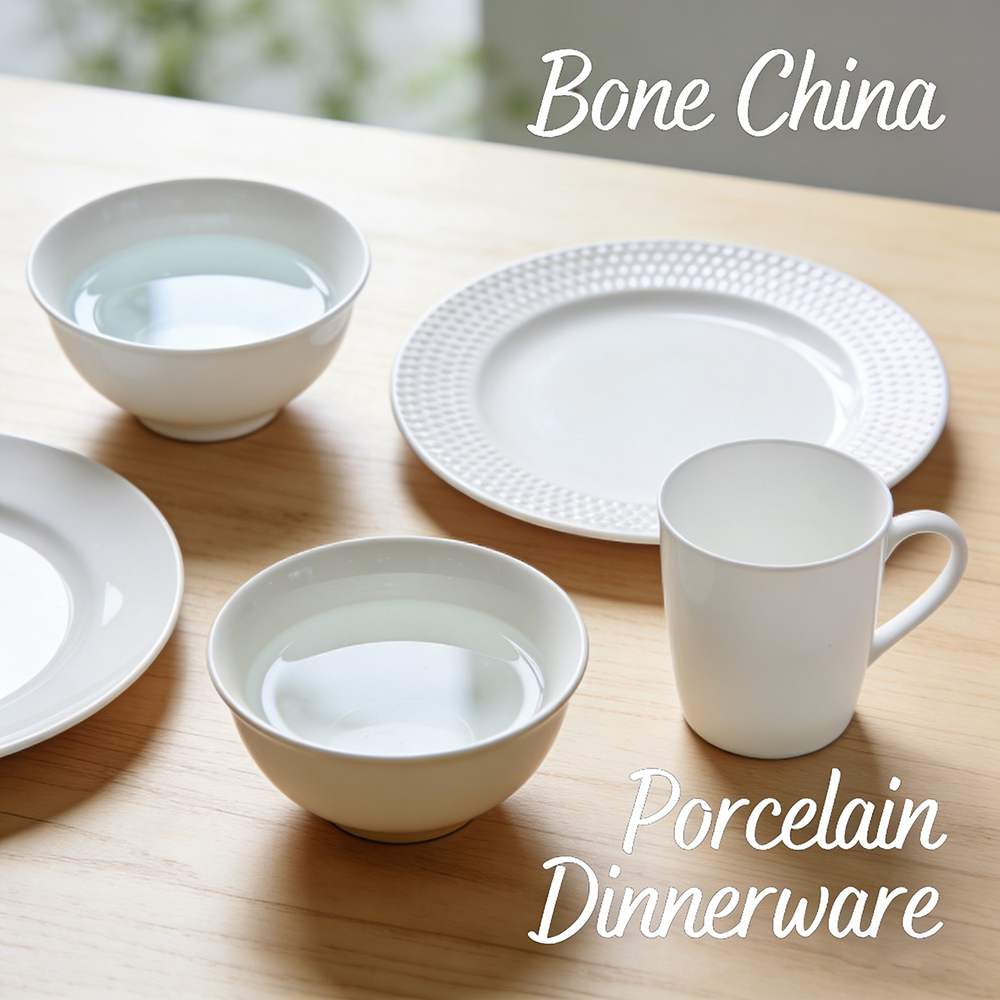
You’ve probably run into this moment while sourcing dinnerware for your hotel or restaurant. One is bone china. The other is porcelain. They look almost identical. Yet the price is different. The weight feels different, and suppliers keep telling you different stories. Both materials sit under the ceramic dinnerware umbrella, but they behave very differently once service begins. What matters is how they handle daily washing, fast-paced service, stacking, and years of use. Bone china dinnerware is known for being lighter and surprisingly strong. Porcelain is valued for its clean look, consistency, and cost efficiency. One may suit fine dining hotels. The other may fit high-volume or casual upscale concepts better. So, which should your hotel choose? This guide breaks down the differences that actually affect operations, durability, cost, and guest experience so you can make a practical buying decision. Bone China vs Porcelain Dinnerware: What’s the Difference? Identical white plates and almost the same price tags make you pause. But once you start using them day after day, you quickly notice differences. They’re made differently, and that affects how they perform in hotel service. That difference matters a lot in hotel operations. What Is Bone China? Bone china looks delicate, but it is built for strength. Pick up a plate, and it feels lighter than expected. It is not flimsy but just lighter. That comes from bone ash mixed into the clay. It changes how the plate sets when fired, letting dinnerware manufacturers keep the walls thin without losing strength. This material was developed in England in the 1700s when makers wanted something refined but tougher than traditional porcelain. The result was a refined material that handled busy dining rooms better, stacked more safely, and chipped less at the edges. That’s why many luxury hotels still rely on it today. It carries a soft white tone, feels comfortable in the hand, and survives repeated service without looking worn out. What Is Porcelain? Porcelain is made from very fine clay and fired at extremely high temperatures. The heat turns it dense and smooth, almost glass-like. That’s where the clean white color comes from. Porcelain was perfected in China long before it reached Europe, and when it did, it became a status symbol. It looked precise, graceful, and formal. In a hospitality setting, porcelain is a better option for presentation, as plates look consistent, and the colors stay sharp. The surface stays smooth after years of washing. It feels slightly heavier than bone china and doesn’t flex much, which some operators prefer for plating control. Physical Characteristics: Bone China vs. Porcelain Both are durable, but they achieve it differently, through different compositions, weight, and the way they handle daily service. Take a quick look at the physical characteristics of bone china vs porcelain to better understand their texture, feel, strength, and composition. Physical Characteristic Bone China Porcelain Appearance Creamy white to warm ivory tone, softer visual finish Bright white, crisp and clean; black options available for modern designs Translucency Noticeable warm glow when held to light, even at normal thickness Minimal translucency unless thin Weight Lighter in hand despite high strength Generally heavier than bone china at similar sizes; feels more rigid Thickness Thin walls made possible by the added strength from bone ash Can be produced thin, but durability depends heavily on formulation and design Texture Smooth, refined surface with a soft, glass-like feel Smooth, polished, glass-like finish Porosity Fully non-porous when properly fired Fully non-porous when properly fired Color Consistency Slight natural variation between batches Highly uniform color across batches Finishing Options Accepts logos, decals, and decorative finishes cleanly Supports logos, decals, and decorative finishes Visual Impression Warm, refined, understated luxury Sharp, formal, high-contrast presentation Dining Association Premium hospitality and fine dining service Fine dining and formal table settings Hospitality-Specific Durability and Performance In a hotel or restaurant, dinnerware does not live a gentle life. There is constant handling of plates, the racks stack high, and the dishwasher is run hot. Here’s how each material holds up when volume is high and breakage becomes expensive. Durability in High-Volume Use If your dining room serves hundreds of covers a day, durability becomes a very important aspect to consider when investing in dinnerware. Bone china dinnerware is a better option in commercial settings because its structure resists edge damage. The material has a bit of flexibility, which helps it survive bumps during service and repeated handling. This is why many fine dining hotels lean towards bone china for long-term use. Porcelain is also a reliable option. However, thinner rims are more vulnerable when plates knock against each other during stacking or clearing. Over time, you’ll notice small chips that add up across a full service set. Hospitality supply studies report that bone china experiences lower replacement rates than porcelain in restaurant environments, which is largely due to reduced chipping during service and washing cycles. Dishwasher Safety and Heat Cycles Commercial dishwashers are tough environments for dinnerware. High heat, fast washing cycles, and constant pressure separate durable dinnerware from fragile stock. Both bone china and porcelain are dishwasher safe when manufactured to commercial standards. The difference only shows up over time. Bone china handles repeated heat exposure more comfortably that helps it to stay stable through hundreds of wash cycles. Like any ceramic, porcelain can crack under sudden temperature changes (thermal shock), especially in thinner or stressed pieces when moving straight from a hot oven to a cold prep surface. In busy kitchens, these transitions happen quickly, which raises the risk of stress cracks. For operations serving hundreds of covers per service, this heat tolerance directly affects replacement costs. Stain and Odor Resistance From tomato sauces to citrus dressing, restaurant food challenges dinnerware every day. Both are fully vitrified and non-porous, which means neither absorbs odors nor stains under normal conditions. However, you should know that bone china tends to keep its surface appearance cleaner over service cycles, even with acidic foods appearing frequently on the menu. And while porcelain remains highly resistant, minor