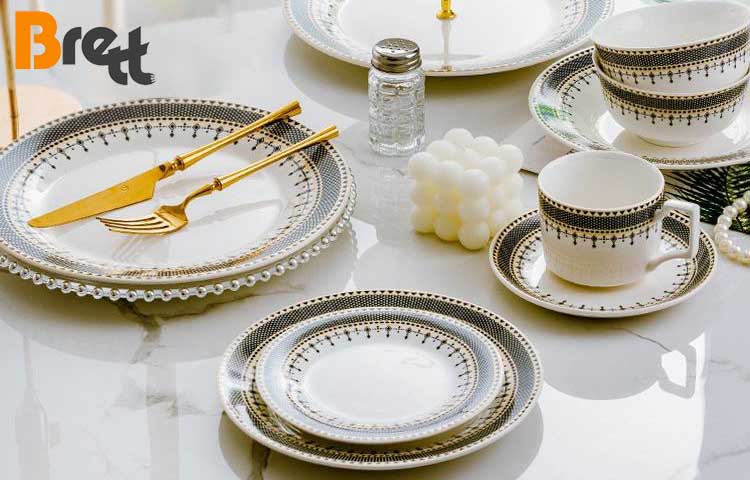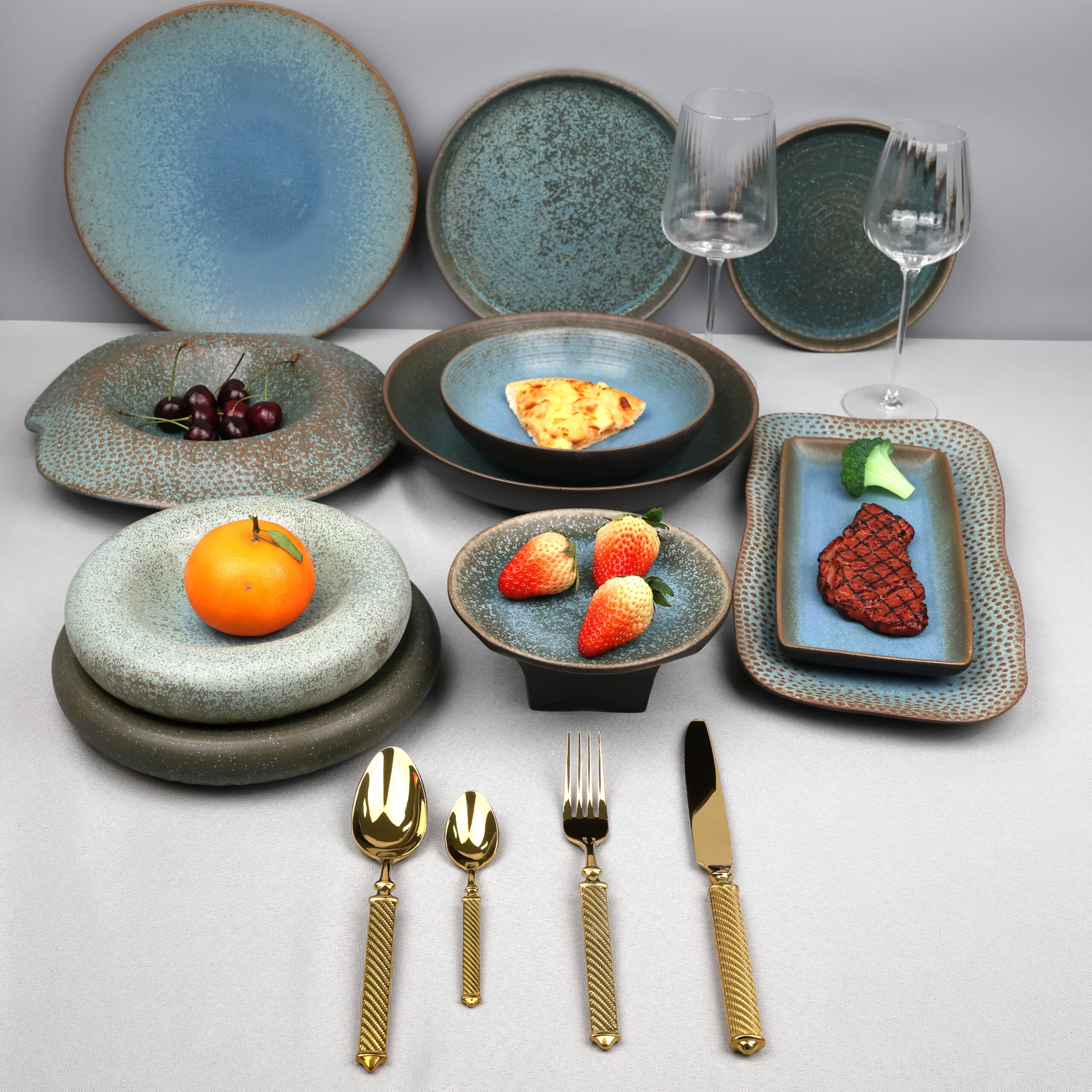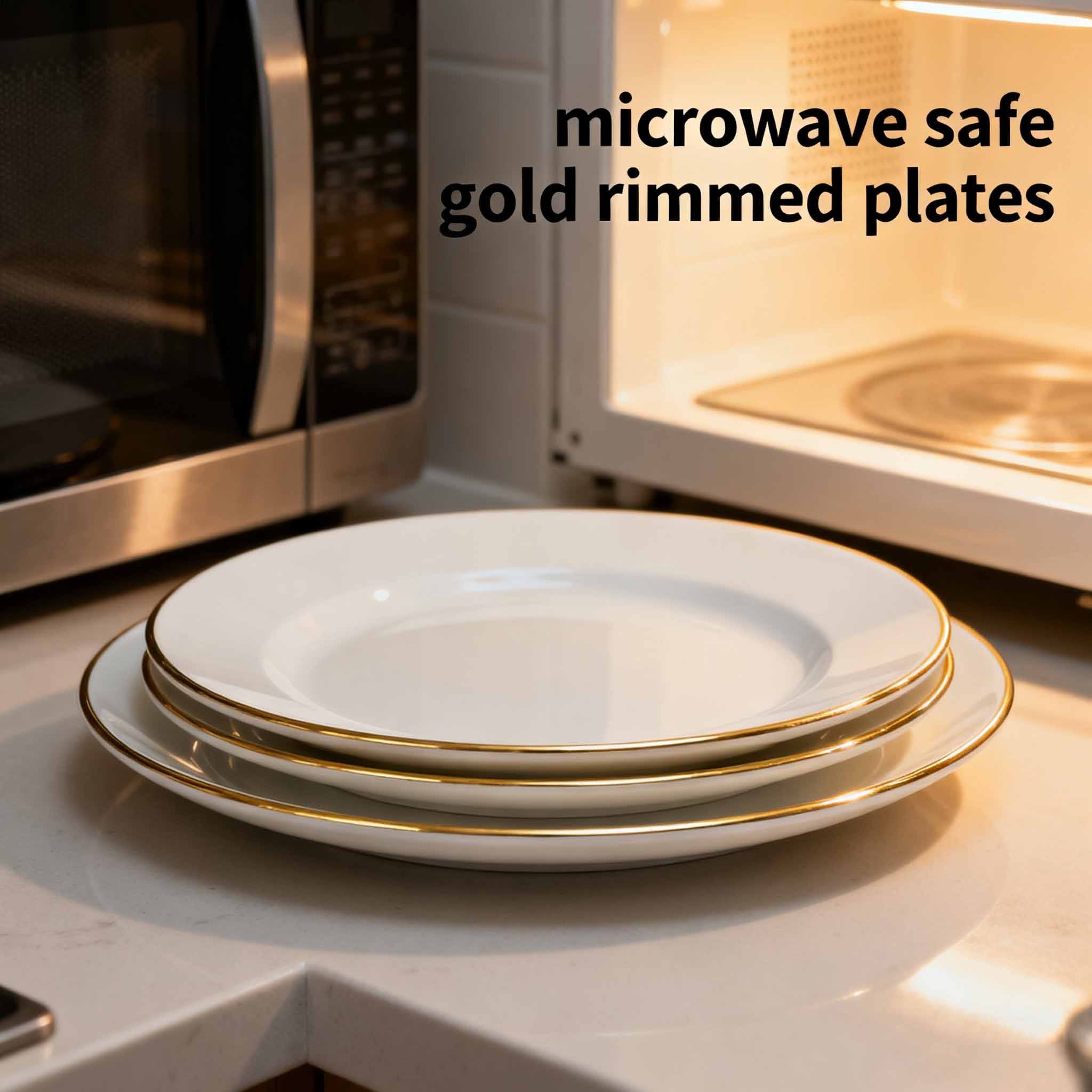
If you’ve ever hesitated to put your beautiful gold rimmed plates in the microwave – worried about “is this safe?”- you’re not alone. Gold-rimmed plates have long been a symbol of elegance popular in fine dining restaurants, luxury hotels, or home dinner settings. Their shimmering metallic edges instantly elevate the table. But “Are gold rimmed plates microwave safe?” still confuses countless people. The short answer is: Most of them are NOT microwave-safe, but there are specific exceptions—especially when high-temperature firing processes are used during production. This article dives deep into the science, safety guidelines, exceptions, and practical usage tips. 1. Understanding the Metallic Rim: Why it Matters in a Microwave Gold rimmed plates typically use: Real gold (usually 12%–24% gold content) Gold lustre, gold water, or gold paste Metallic decorative materials applied on the rim Microwaves heat food by causing water molecules to vibrate. But metals behave differently: Metals reflect microwaves Reflection may cause sparks or “arcing” The plate could overheat The microwave magnetron might get damaged So while the plate may look harmless, any metal on the surface becomes a potential risk in a microwave environment. 2. Why Most Gold Rimmed Plates Are Not Microwave Safe Here’s why standard gold rimmed dinnerware is usually unsafe: 2.1 Low-temperature applied gold reacts strongly in microwaves Many manufacturers apply the gold rim using low-fire decals or electroplating, which leaves the metallic layer exposed and conductive. This greatly increases microwave reactions. 2.2 The gold layer is not fully fused into the glaze When the gold sits on top of the glaze, microwaves can cause: Sparking Cracking Smoke or burning marks Damage to both plate and microwave 2.3 Uneven metal thickness creates concentrated heat points Microwaves target irregularities. Thicker gold areas can overheat rapidly. For these reasons, standard gold-rimmed plates are labeled “NOT microwave safe.” 3. The Important Exception: These Gold Rim Plates Might Be Microwave Safe If you’re wondering is there any plates with real gold rims can be put in the microwave? Yes, There are gold rimmed plates that can be microwave safe – If high-temperature fired 3.1 High-Temperature Fired Gold Rim Plates While most gold-rimmed plates are unsafe, a small category of high-end ceramic or porcelain plates can be microwave safe: ✔ If the gold rim is applied using real gold materials ✔ And then fired in a kiln around 800°C ✔ Allowing the gold layer to fuse and partially “glassify” with the glaze This high-temperature treatment stabilizes the gold, making it: Less conductive Less likely to spark More heat resistant More securely bonded to the plate surface In short: If the gold trim has undergone high-temperature firing, it may be microwave safe. ∗But Important Warning: Not All High-Fire Gold is Automatically Safe Even with high-temperature firing, the following variables matter: Gold material purity Layer thickness Firing temperature variation Manufacturer’s formulation Glaze compatibility Therefore: Only plates explicitly marked “Microwave Safe” should be microwaved. If the manufacturer did not test and label it, treat it as “NOT microwave safe.” 3.2 Using Microwave-Safe Rated Gold Water This is the most advanced method currently used in the ceramic industry. But not all gold water is microwave-safe — gold content must meet strict standards. Gold water (a precious metal liquid used in gilding) typically contains 8%–21% real gold. Higher purity = higher conductivity → higher risk. To make gold rims microwave safe, the gold water must meet: International microwave-compatibility standards Uniform conductivity levels High-temperature stability Low arcing potential Full compatibility with porcelain glaze systems In short: ✔ Not all gold water is equal ✔ Only certified, specification-compliant gold water can be used for microwave-safe gilding Example of Microwave-safe gold water: Heraeus Gold Water Heraeus, a German precious-metals giant with over 160 years of history, is considered the global benchmark for high-quality gold water(contain 24K real gold) used in ceramic dinnerware. (Which is Brett using for our gold rim plates) Heraeus gold water: Offers stable purity and controlled gold content Can fully glassify under high-temperature firing Shows extremely low conductivity after firing Meets worldwide ceramic microwave-compatibility standards Maintains consistent color and shine without fading This makes Heraeus gold water one of the very few materials capable of producing microwave-safe gold rims, when paired with correct firing temperatures. 4. How to Tell Whether Your Gold Rimmed Plate is Microwave Safe 4.1 Check the bottom stamp Check is there any label or symbol: “Microwave Safe” “Not Microwave Safe” Symbols indicating microwave compatibility If nothing is written → assume NOT safe. 4.2 Visit the manufacturer’s website Fine china and hotelware brands often list microwave guidelines. 4.3 Look at the production method If the brand states: High-temperature fired gold Kiln-fused metallic rim Real gold firing process Then it may be microwave safe—but only if they explicitly confirm it. 4.4 Perform the 20-second test (only if manufacturer confirms it may be safe) Place the empty plate in the microwave with a cup of water. Heat for 20 seconds: Plate cold + water hot = safer Plate hot = unsafe ∗Noticed: Never test plates that are NOT labeled microwave-safe. 5. What Happens if You Microwave a Plate With Regular Gold Rim? Possible risks: Sparks (electric arcing) Burn marks on rim Damage to microwave interior Cracking or shattering of the plate Risk of fire in severe cases ∗There are many other ways to heat food besides microwave, and you can use a different plate. After all, safety is over aesthetics, isn’t it? – so don’t “testing luck.” 6. Are There Safer Alternatives? If you need microwave-compatible plates with a luxury look, consider: Gold-look decal without metal content Colored glaze simulating metallic shine Electroplating-free patterns Matte painted borders They provide elegance without the risk. 7. For Restaurants, Hotels & Cafés: Practical Guidelines Because hospitality environments use microwaves frequently, you should: Use ceramic plates without metallic decoration Reserve gold rimmed plates for plating & dining, not reheating Train kitchen staff on safe material usage Ask suppliers whether the gold is high-fire or low-fire If you need safe, durable, and hotel-grade microwave-friendly tableware,Consider choosing high-temperature ceramic or more stable porcelain styles, such as Brett 1320℃ kiln change ceramic dinnerware series. Summary: Are